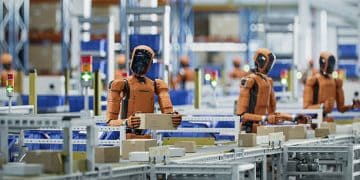






South Korea’s robotics industry is preparing for a major expansion as automotive manufacturing expertise is increasingly being applied to humanoid robot production.
A major automotive group is developing a dedicated humanoid robot supply chain ahead of its planned mass production program in 2028. Around 200 domestic Tier 1 suppliers have been invited to present business plans covering specialized materials, components, manufacturing technologies, and production capabilities for humanoid robots.
The initiative aims to establish an efficient domestic supply network capable of supporting annual production of approximately 30,000 humanoid units. A key focus is reducing production costs, with manufacturers targeting a future price range of $20,000 to $30,000 per unit compared with current prices exceeding $100,000.
Actuators are among the most important components in this effort, potentially representing 30% to 50% of a humanoid robot’s total cost. Suppliers are therefore developing integrated actuator systems, precision motors, reducers, lightweight housings, sensors, power converters, and other specialized components designed for large scale production.
The development is also encouraging collaboration between established automotive suppliers and specialized robotics companies. This is creating new connections across Tier 1, Tier 2, and Tier 3 supply networks while expanding opportunities for smaller technology and component manufacturers.
Several suppliers are adapting automotive mass production capabilities to robotics, including modular component designs, integrated drive systems, precision reduction gears, lightweight structures, and automated production equipment. Research into rare earth free motor technologies is also supporting efforts to broaden the domestic sourcing base for critical components.
The emerging robotics supply chain could contribute to greater localization of selected materials and components currently sourced internationally. By combining South Korea’s established automotive manufacturing capabilities with specialized robotics technologies, manufacturers are developing an increasingly integrated ecosystem for humanoid production.
Global demand is expected to provide further momentum. Industry estimates project annual humanoid shipments could rise from around 20,000 units in 2025 to approximately 1 million units by 2030 and 6 million units by 2035. This projected growth is encouraging manufacturers to strengthen component capacity, workforce development, research and development, and supplier collaboration.
The expansion highlights how established manufacturing ecosystems can support the development of new technology industries. As automotive suppliers diversify into robotics, South Korea is building a broader industrial supply chain capable of supporting the next generation of automated systems.
#AutomationAndRobotics #Robotics #HumanoidRobots #SupplyChain #SupplyChainManagement #Manufacturing #SouthKorea #IndustrialAutomation #Technology #AdvancedManufacturing #Sourcing #SupplierDevelopment #RoboticsSupplyChain #SmartManufacturing #Innovation


