


• Latest
  • Trending
  • All
  • Industry
  • Compliance
  • Global Trade
  • Industry
  • Sustainability & Ethics
  • Video
  • Security & Risk
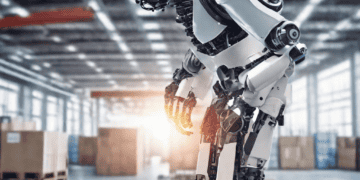
Advanced robot in a warehouse, showcasing AI's role in supply chain optimization. - Supply Chain News

The Role of AI in Enhancing Supply Chains

05/19/2023
The China-Ghana Emerging Industries Trade and Investment Matchmaking Conference was successfully held in Accra, Ghana

The China-Ghana Emerging Industries Trade and Investment Matchmaking Conference was successfully held in Accra, Ghana

07/10/2026
Ga Mantse Leads Prestigious Opening Ceremony as Ghana Investment & Trade Week 7th , Africa Build Show 4th and Megawatt 3rd Edition 2026 Officially Opens in Accra

Ga Mantse Leads Prestigious Opening Ceremony as Ghana Investment & Trade Week 7th , Africa Build Show 4th and Megawatt 3rd Edition 2026 Officially Opens in Accra

07/08/2026
International Trade Council Appoints Charbel Abi Antoun as Chapter Leader for the Middle East

International Trade Council Appoints Charbel Abi Antoun as Chapter Leader for the Middle East

07/07/2026
Blockchain Expands Supply Chain Traceability

Blockchain Expands Supply Chain Traceability

07/03/2026
Supply Chains Accelerate Emissions Reduction Efforts

Supply Chains Accelerate Emissions Reduction Efforts

07/03/2026
AI Expands in Trade and Logistics Operations

AI Expands in Trade and Logistics Operations

07/03/2026
Businesses Adjust to Global Tariff Changes

Businesses Adjust to Global Tariff Changes

07/03/2026
Ocean Freight Spot Rates Extend Early July Gains

Ocean Freight Spot Rates Extend Early July Gains

07/03/2026
International Trade Council Appoints Damian Mohammed to Lead New Northern Arc Chapter

International Trade Council Appoints Damian Mohammed to Lead New Northern Arc Chapter

07/03/2026
As reported on June 30, 2026, sustainable logistics initiatives are becoming increasingly embedded in global supply chain strategies as companies respond to rising environmental expectations, regulatory pressures, and long-term cost efficiency goals. Businesses across transportation, warehousing, and distribution sectors are actively integrating sustainability into core operations rather than treating it as a separate or secondary objective. A major area of focus is emissions reduction, with companies optimizing routing systems to minimize fuel consumption, congestion delays, and unnecessary mileage. Advanced logistics planning tools and AI-driven scheduling systems are being used to improve delivery efficiency while lowering overall carbon output across transportation networks. In addition, organizations are expanding the use of alternative fuels, including low-emission fuels and electrified transport options, particularly for short-haul and last-mile delivery operations. These shifts are supported by growing investments in charging infrastructure, fleet modernization, and partnerships aimed at accelerating cleaner transportation adoption. Warehousing operations are also undergoing significant transformation, with companies implementing energy-efficient facility designs, smart lighting systems, and automated inventory management technologies to reduce energy consumption and improve productivity. Many logistics providers are also adopting circular economy principles, such as packaging reuse, waste reduction programs, and materials recycling initiatives to further reduce environmental impact. Industry observers note that these combined efforts are not only contributing to environmental sustainability but also improving operational efficiency, cost management, and supply chain resilience. While challenges remain in scaling green technologies across all regions, the momentum behind sustainable logistics continues to grow as companies align their operations with both regulatory requirements and stakeholder expectations.

Sustainable Practices Gain Momentum in Global Logistics

07/01/2026
Domestic Manufacturing Boosts Supply Chain Resilience

Domestic Manufacturing Boosts Supply Chain Resilience

07/01/2026
U.S. Trade Policy Changes Drive Global Compliance Efforts

U.S. Trade Policy Changes Drive Global Compliance Efforts

07/01/2026
supplychainreport
Friday, July 10, 2026
  • Home
  • Industry
    • Supply Chain
    • Logistics & Transportation
    • Importing & Exporting
    • Manufacturing
    • Warehousing & Distribution
  • Compliance
    • Supply Chain Transparency
    • Anti-Money Laundering (AML)
    • Know Your Customer (KYC)
    • Risk Management
    • Export Controls
    • Sanctions
  • Global Trade
    • Market Trends
    • Economic Indicators
    • Sourcing
    • Trade Policies
    • International Relations
    • Trade Agreements
    • Tariffs & Duties
    • Import/Export Statistics
  • Luxury Goods
  • Industry
    • Blockchain in Supply Chain
    • Importing & Exporting
    • Automation & Robotics
    • Artificial Intelligence in Trade
    • Data & Analytics
  • Sustainability & Ethics
    • Green Supply Chains
    • Sustainable Logistics
    • Ethical Sourcing
    • Corporate Social Responsibility
    • Environmental Policies
  • Security & Risk
    • Cybersecurity in Trade
    • Fraud & Scams
    • Risk Mitigation
    • Security Protocols
    • Data Protection
  • ITC News
    • ITC Featured Members
    • ITC Business Councils Highlights
  • Events
    • Upcoming Conferences
    • Upcoming FREE Educational Webinars
No Result
View All Result
supplychainreport
No Result
View All Result

The Role of AI in Enhancing Supply Chains

by Richie
05/19/2023
in Artificial Intelligence in Trade, Blockchain in Supply Chain, Industry, Supply Chain, Supply Chain Transparency

YOU MAY ALSO LIKE

Blockchain Expands Supply Chain Traceability

AI Expands in Trade and Logistics Operations

In recent years, the world has faced various unexpected challenges, ranging from the global pandemic to geopolitical conflicts like the Russia-Ukraine situation. These events have had far-reaching implications, and the term “supply chain issues” has become increasingly common, with factors such as travel restrictions and border complications making logistics more complex.

However, there is a potential solution on the horizon: artificial intelligence (AI). This article explores how AI can play a vital role in supply chain management and examines its potential impact on the future of this industry.

Supply Chains and AI

Artificial intelligence has often been associated with robots and assumed to have limited applications, primarily focused on automating repetitive tasks or performing basic functions. Historically, AI has been used for tasks like determining optimal material purchase timing and quantities based on human-defined strategies.

However, AI has evolved significantly beyond this point.

One of its most promising branches is machine learning, enabling software to not only execute pre-programmed commands but also learn from data over time and make decisions autonomously. This advancement allows AI to undertake more complex tasks, with applications ranging from creating “deepfakes” to winning chess matches.

Within the realm of supply chains, machine learning can be employed not just for calculations but also for making informed purchasing decisions based on past successes and failures. It can automate processes along the Plan-Source-Make-Deliver (SCOR) continuum, such as adjusting inventory levels in response to supply fluctuations or assisting companies in navigating customs and trade regulations, a significant source of delays.

AI may even integrate with blockchain technology to execute smart contracts, offering enhanced supply chain transparency and ensuring timely payments.

Companies poised to benefit from this shift include C3.ai (AI), which has developed inventory optimization software utilizing AI and ML algorithms, and the cloud platform Coupa (LON: 0I4B), which has introduced features to assist firms in making AI-driven supply chain decisions.

The Role of AI During Crises

While machine learning excels at decision-making based on available data, there are moments when extraordinary events occur, and no relevant historical data is available. Examples include events like the COVID-19 pandemic, which fall under the “black swan” category. Can AI still contribute to guiding supply chains during such unforeseen circumstances?

AI is not a miracle solution and cannot, for instance, teleport transportation vehicles. However, it can play a crucial role in identifying areas of high systemic risk within a supply chain. Machine learning can virtually recreate a supply chain to pinpoint vulnerabilities, ultimately strengthening the chain to withstand unexpected shocks. Additionally, AI can create simulations to visualize the potential outcomes of different responses to various scenarios.

The Russia-Ukraine conflict is another event that has disrupted supply chains due to the reliance on these regions for essential commodities like wheat and gas. During shortages, it becomes imperative to monitor inventory levels effectively and make the most of available resources—this is an area where AI can make a significant impact. By combining Internet of Things (IoT) technology and machine learning, inventory can be automatically tracked across the supply chain and accessed via a database, complete with analytics.

Cost Considerations

Implementing AI in supply chain management can be an excellent solution, but it must be financially feasible for companies. Supply chain activities already account for up to 50% of business costs, leaving little room for additional expenses. The adoption of AI will partially depend on how many businesses are willing to invest in this technology, with early adopters likely bearing the brunt of the costs.

However, in the long run, the enhanced efficiency resulting from a technologically advanced approach should help offset expenses. According to a McKinsey report, early adopters of AI-enabled supply chain management tools reduced their logistics costs by 15%. As the saying goes, “no pain, no gain.”

The Future of Supply Chains and AI

Some experts believe that the ongoing innovation in the supply chain industry is comparable to the transformation that occurred in the banking sector in the 1970s when ATMs replaced human bank staff. It is projected that the supply chain market will experience a growth of 42.9% from 2017 to 2023, reaching a value of $6.5 billion, partly thanks to innovations like AI integration.

Nonetheless, unanswered questions remain, such as the potential vulnerabilities to cyberattacks disrupting the entire supply chain and whether AI alone can navigate unprecedented events like pandemics and geopolitical tensions.

Concerns about job displacement due to AI replacing certain tasks are also prevalent. However, the reality is likely to involve professionals adapting to new roles, collaborating with AI, rather than being replaced. Innovation in this field appears inevitable, with the key challenge being to find the most effective ways to adapt and address potential issues along the way.

Catch the latest supply chain news at The Supply Chain Report. Learn more about international trade at ADAMftd.com with free tools.

#AIinSupplyChains #ArtificialIntelligence #SupplyChainManagement #MachineLearning #LogisticsInnovation #SupplyChainOptimization #BlockchainTechnology #SmartContracts #InventoryManagement #Coupa #C3ai #SupplyChainResilience #AIandSupplyChains #FutureOfSupplyChains #TechDrivenLogistics #CostSavingsThroughAI #McKinseyReport #AIForCrisisManagement #PandemicSupplyChainImpact #GeopoliticalSupplyChainChallenges #SupplyChainSimulation #SupplyChainAutomation #AIInBusiness #AIandBlockchainIntegration #AIInLogistics

ShareTweet

Share Your News

Whether it’s a groundbreaking achievement, a heartwarming tale, or an insightful perspective, we want to hear it. Share your news with us, and let’s amplify your voice in the digital symphony of stories.

Submit

A man is riding a bike on a hill.

The Supply Chain Report is your essential daily news website, serving as a trusted source for comprehensive coverage of the complex and ever-evolving global supply chain dynamics. Our expert team delves into the intricacies of international trade, manufacturing, logistics, importing, exporting, and supply chain management; providing in-depth analysis and up-to-date news on the latest trends, disruptions, and technological advancements affecting industries worldwide. From detailed reports on international trade through to insights into procurement strategies and inventory management, we offer valuable content that helps professionals stay informed and make knowledgeable decisions in a fast-paced market.

Each day, we bring you cutting-edge news and expert commentary that dissect significant international trade and supply chain issues Our coverage spans a wide array of sectors including manufacturing, retail, healthcare, food, consumer goods, and technology, ensuring that no matter your field, you have the strategic information needed to navigate the challenges and opportunities of today’s supply chain landscape. By synthesizing complex data and presenting actionable insights, The Supply Chain Report empowers business leaders, policymakers, and logistics professionals to optimize their operations and drive forward with confidence in an interconnected world.

Connect With Us

  • About
  • Events
  • Privacy Policy
  • Contact Us

© 2024 International Centre for Trade Transparency Limited. Incorporated in the United Kingdom.

No Result
View All Result
  • Home
  • Industry
    • Supply Chain
    • Logistics & Transportation
    • Importing & Exporting
    • Manufacturing
    • Warehousing & Distribution
  • Compliance
    • Supply Chain Transparency
    • Anti-Money Laundering (AML)
    • Know Your Customer (KYC)
    • Risk Management
    • Export Controls
    • Sanctions
  • Global Trade
    • Market Trends
    • Economic Indicators
    • Sourcing
    • Trade Policies
    • International Relations
    • Trade Agreements
    • Tariffs & Duties
    • Import/Export Statistics
  • Luxury Goods
  • Industry
    • Blockchain in Supply Chain
    • Importing & Exporting
    • Automation & Robotics
    • Artificial Intelligence in Trade
    • Data & Analytics
  • Sustainability & Ethics
    • Green Supply Chains
    • Sustainable Logistics
    • Ethical Sourcing
    • Corporate Social Responsibility
    • Environmental Policies
  • Security & Risk
    • Cybersecurity in Trade
    • Fraud & Scams
    • Risk Mitigation
    • Security Protocols
    • Data Protection
  • ITC News
    • ITC Featured Members
    • ITC Business Councils Highlights
  • Events
    • Upcoming Conferences
    • Upcoming FREE Educational Webinars

© 2024 International Centre for Trade Transparency Limited. Incorporated in the United Kingdom.