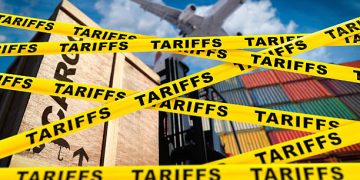






UK business leaders have called on the government to consider adopting an EU-style “trade bazooka” to safeguard the country’s economic interests following tariff concerns raised by U.S. President Donald Trump, warning that limited economic security measures could place growth and employment at risk.
The British Chambers of Commerce (BCC) said the UK’s current approach to economic security is insufficient at a time of rising transatlantic trade tensions and increasing uncertainty in global markets. The organization, which represents thousands of companies across multiple sectors, urged Prime Minister Keir Starmer to take a leading role in strengthening the country’s defenses against external economic pressures, citing what it described as years of limited policy focus on long-term trade resilience.
According to the BCC, UK businesses are operating in a more complex international environment shaped by Brexit adjustments, the lingering effects of the Covid-19 pandemic, and broader geopolitical uncertainty. These factors, the group said, have made supply chains more vulnerable and increased the risk of sudden policy shifts affecting cross-border trade and investment.
The call for stronger tools follows recent remarks from the U.S. president indicating the possibility of imposing significant tariffs on the UK unless a digital services tax affecting U.S. technology companies is removed. Business leaders said such developments highlight the need for the UK to have mechanisms in place to deter or respond to punitive trade policies from major partners.
In a report outlining recommendations to address declining competitiveness, the BCC proposed that the UK create a “trade bazooka,” modeled on the European Union’s anti-coercion instrument. The proposed mechanism would allow the government to respond to economic pressure through a range of measures, potentially including restrictions on goods and services trade, limits on access to public procurement programs, and controls affecting financial markets, property rights, and foreign direct investment.
The organization said the objective of such a tool would be deterrence, giving policymakers the ability to respond proportionately if trading partners attempt to influence domestic economic policy through tariffs or other trade restrictions. It emphasized that any new legislation should also include safeguards to protect UK businesses and maintain stability in commercial relationships.
The BCC also encouraged ministers to take a robust approach to the EU’s “Made in Europe” agenda to ensure UK companies maintain a meaningful role in wider European supply chains. The group argued that closer alignment in certain areas could help British firms remain competitive and avoid being excluded from major procurement and manufacturing networks.
Additional recommendations included increasing participation by UK companies in domestic defence procurement, strengthening investment screening processes, and establishing a dedicated economic security cabinet committee. The BCC said such a committee would help coordinate policy across departments and ensure quicker responses to emerging trade risks.
In its report, the BCC stated that the government should add a “trade bazooka” to its policy toolkit, alongside powers enabling ministers to deploy duties, adjust market access, enhance investment scrutiny, and manage subsidies when necessary. It added that these tools should be used carefully and transparently to maintain investor confidence.
Shevaun Haviland, director general of the BCC, said the government should prepare for a more assertive response to evolving global trade dynamics. She noted that economic security has become increasingly important for growth, competitiveness, and national resilience, and warned that insufficient preparation could weaken the UK’s position in international markets.
UK trade minister Chris Bryant said the report highlighted the importance of maintaining free and fair trade while ensuring markets are not distorted by economic pressure. He noted that the government has already identified eight key sectors within its industrial strategy and taken steps to strengthen supply chains to reduce vulnerability to market shocks.
Bryant added that the government is also reviewing whether additional tools may be needed as a last resort to respond to economic pressure if diplomatic solutions are not sufficient. He said ministers are consulting stakeholders to determine how such measures could be implemented while preserving open market principles.
The trade minister also referenced recent engagement with European partners to support business participation in regional supply chains and reaffirmed the government’s commitment to keeping the UK open to investment while improving economic resilience. He said collaboration with business groups, including the BCC, would continue as policymakers assess next steps.
Analysts noted that any retaliatory action affecting U.S. service-sector companies could carry risks due to the scale of American economic involvement in the UK. The United States remains Britain’s largest single trading partner, accounting for approximately one-fifth of total UK trade. U.S. companies also hold more than £640 billion in investments across the British economy, spanning finance, technology, manufacturing, and services.
Business groups said this deep economic relationship underscores the need for carefully calibrated policies that protect domestic interests without disrupting trade flows. They added that improving economic security tools could help the UK respond to future disputes while maintaining stable partnerships with major trading partners.
#SupplyChainNews #TradePolicy #EconomicSecurity #GlobalTrade #UKBusiness