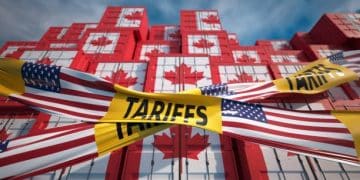






Canadian Prime Minister Mark Carney said U.S.-made alcoholic beverages could return to store shelves if progress is made in resolving tariffs affecting metals and automobiles, as trade discussions between Canada and the United States continue. His comments come amid growing public exchanges between officials from both countries over trade measures and market access.
“Issues such as decisions on which alcohol to put on the shelves — we can make progress very quickly on that with progress in other areas,” Carney said on Thursday, indicating that alcohol restrictions may be tied to broader negotiations.
U.S. Commerce Secretary Howard Lutnick described the removal of American liquor from Canadian provincial shelves as “disrespectful,” while U.S. Trade Representative Jamieson Greer warned of possible consequences if the issue remains unresolved. The restrictions were introduced by several Canadian provinces following tariffs imposed by the Trump administration on key Canadian sectors.
Ontario, whose liquor control board is one of the largest alcohol purchasers globally, removed U.S.-made products from store shelves in March 2025. The move was part of a broader response to tariffs affecting industries such as steel, aluminum, automobiles, and agricultural products. The U.S. administration has argued the tariffs are intended to strengthen domestic manufacturing and support employment.
Carney said the tariffs conflict with the United States–Mexico–Canada Agreement (USMCA), the trilateral free trade deal governing North American commerce. He added that Canada is prepared to enter “detailed negotiations” with the United States regarding the future of regional trade, but emphasized that Canada is also prepared to wait if necessary.
The United States has identified several trade concerns involving Canada, including alcohol restrictions and access to the Canadian dairy market. The ongoing discussions come ahead of a July 1 deadline for a mandatory review of the USMCA, which requires the three countries to assess the agreement’s performance and consider potential updates.
Carney stressed that negotiations require cooperation from both sides, telling reporters that Canada is not simply following U.S. instructions. He also noted that decisions on liquor sales are made at the provincial level, meaning individual provinces must determine whether U.S. alcohol returns to store shelves.
Ontario Premier Doug Ford said U.S. liquor will not be restocked in provincial stores until sector-specific tariffs are removed. Speaking in an interview, Ford said reduced Canadian purchases of U.S. goods and lower cross-border travel have had economic implications, adding that the situation could be resolved quickly if tariffs are lifted.
Business leaders suggested alcohol restrictions may serve as leverage in broader trade talks. Candace Laing, president and CEO of the Canadian Chamber of Commerce, said Canada has “red lines” it does not intend to cross, but remains open to negotiations aimed at reducing tariffs. She added that Canada would not make concessions outside of a structured negotiation process.
Analysts also pointed to potential strategic advantages for Canada in waiting. Fen Hampson, a professor at Carleton University and co-chair of its expert group on Canada–U.S. relations, said Canada may benefit from observing trade arrangements the United States reaches with other partners before finalizing its own position. He added that Canada supplies goods important to the U.S. economy, including metals, energy, and critical minerals, which could influence negotiations.
The back-and-forth between officials highlights ongoing tensions in trade discussions, while both sides continue to signal willingness to negotiate. With the USMCA review deadline approaching, developments around tariffs and provincial alcohol policies are expected to remain central to broader North American trade talks.
#SupplyChainNews #TradePolicy #USCanadaTrade #TariffUpdate #GlobalTrade