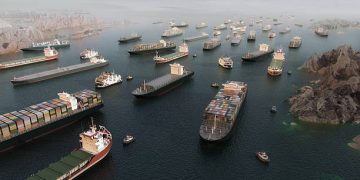






The United States has warned Oman that it could face sanctions if it assists in establishing a tolling system for commercial vessels passing through the Strait of Hormuz, according to statements made by senior U.S. officials on Thursday.
U.S. Treasury Secretary Scott Bessent said Washington would “aggressively” target any individuals or entities involved in facilitating fees or tolls on shipping traffic through the strategic waterway. He added that the United States would not support efforts that could disrupt the free flow of international commerce through the strait.
In a statement posted on social media, Bessent said Oman and other potential partners could face penalties if they participate in measures related to toll collection in the shipping corridor.
The comments came amid ongoing discussions regarding maritime access and navigation in the Strait of Hormuz, one of the world’s most important energy transit routes. The waterway handles a significant share of global oil shipments and plays a major role in international energy and trade markets.
Recent tensions surrounding the strait have raised concerns among governments, shipping operators, and energy markets due to the potential impact on supply chains and fuel prices.
Oman, which has traditionally maintained a neutral diplomatic position and played a mediation role in regional affairs, has not publicly stated that it intends to seek direct control over the waterway or establish a tolling framework.
Speaking to reporters later on Thursday, Bessent said President Donald Trump’s recent remarks were intended to emphasize the importance of maintaining freedom of navigation in the strait.
Market analysts noted that uncertainty surrounding shipping access through Hormuz has already contributed to higher energy prices and increased concerns over global supply disruptions. Before the recent tensions, approximately 20% of global oil shipments moved through the corridor.
The United States and Iran have reportedly continued indirect discussions on broader regional and trade-related issues, with the status and management of the Strait of Hormuz emerging as a key topic.
President Trump reiterated this week that the strait should remain open for international shipping traffic and described it as an international waterway.
Iranian officials also commented on the issue Thursday, stating that Tehran seeks to maintain security and stability in the region while protecting its national interests. Officials added that Iran supports greater regional cooperation and trust-building efforts related to maritime security and trade routes.
Industry observers said developments involving the Strait of Hormuz will continue to be closely monitored due to their potential effects on global energy markets, shipping operations, and supply chain stability.
#GlobalTrade #EnergyMarkets #ShippingNews #SupplyChain #OilTrade