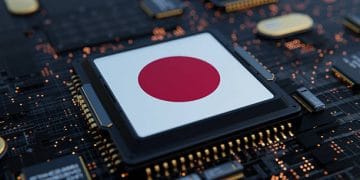






Japan’s semiconductor industry is undergoing significant expansion as the country seeks to strengthen its position in the global chip supply chain, while simultaneously facing structural constraints linked to technology complexity, resource dependence, and global demand pressures.
The government has prioritized semiconductors as a strategic industry, launching large-scale support programs aimed at increasing domestic production capacity. These initiatives are designed to reduce reliance on overseas manufacturing and improve resilience in critical technology supply chains. The strategy includes financial incentives, public-private partnerships, and targeted investments in advanced fabrication capabilities.
A key component of this effort is Rapidus, a government-supported semiconductor company focused on developing advanced 2-nanometer chip manufacturing. The company has attracted funding from both public sources and major Japanese corporations as it works to build pilot production lines and prepare for future large-scale manufacturing. Rapidus is also engaging with global technology firms as it attempts to secure early customers for its planned output.
In parallel, established Japanese semiconductor firms are expanding their operations, particularly in areas such as chip equipment, materials, and specialty chemicals. These segments remain a core strength of Japan’s semiconductor ecosystem and are essential to global chip production. However, they also face increasing demand pressures as new fabrication plants are built domestically and internationally.
Industry observers note that while Japan has strong capabilities in materials and precision manufacturing, advanced semiconductor production remains highly concentrated globally. The supply chain depends on a limited number of suppliers for critical tools and components, creating potential bottlenecks when demand surges.
Global trends, particularly the rapid growth of artificial intelligence, electric vehicles, and high-performance computing, are contributing to sustained demand for advanced semiconductors. This has led to increased competition among countries and companies to secure access to production capacity and supply chain inputs.
At the same time, Japan’s semiconductor expansion efforts are closely linked to broader economic security policies. Policymakers view chip manufacturing as essential to national industrial competitiveness, given its role in automotive production, electronics, telecommunications, and defense-related technologies.
Foreign investment is also playing a growing role in Japan’s semiconductor ecosystem, with international companies expanding partnerships and facilities to support production growth. This has further integrated Japan into a highly globalized and interdependent supply chain network.
Despite strong momentum, challenges remain. These include securing sufficient skilled labor, maintaining cost competitiveness, ensuring stable access to advanced equipment, and navigating the long development timelines required for cutting-edge semiconductor production.
As Japan continues to expand its semiconductor capabilities, the sector is expected to remain a key focus area for both industrial policy and global supply chain strategy in the coming years.
#Semiconductors #JapanIndustry #SupplyChainNews #ChipManufacturing #GlobalTrade


