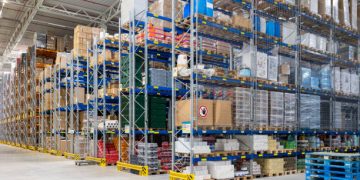







As the beverage industry prepares for its annual peak season, ITS Logistics announced that its nationwide Food & Beverage Hubs network is structured to help shippers manage rising demand within an increasingly complex supply chain environment.
The purpose-built distribution network integrates fulfillment, transportation, and compliance execution to support manufacturers, importers, and distributors operating under changing regulatory requirements and diverse sales channels. According to the company, the hubs are designed to provide scalable infrastructure capable of maintaining service levels, regulatory compliance, and cost control during both peak and steady-state operations.
“Peak season in food and beverage does not create risk; it reveals structural weaknesses already embedded in the network,” said Kasia Wenker, Vice President of Solutions Engineering at ITS Logistics. She noted that brands with resilient operating models are better positioned to manage demand spikes while maintaining traceability and operational discipline.
Peak season for beverage sales typically runs from mid-May through mid-July, with many shippers increasing activity as early as March. The 2026 season follows a year marked by elevated supply chain risks. According to reporting from Verisk Cargonet, food and beverage was the most frequently stolen commodity in 2025. Of the estimated $725 million in cargo theft losses recorded last year, incidents involving food and beverage products increased 47% year over year.
In addition to theft concerns, brands continue to face margin pressure tied to sourcing volatility, transportation cost variability, and working-capital constraints. These conditions are prompting tighter inventory management and heightened service expectations.
ITS Logistics stated that its Food & Beverage Hubs combine food-grade facilities, standardized operating procedures, and centralized quality governance supported by an integrated technology platform. The network is designed to provide two-day reach to most of the U.S. population while supporting multiple channels, including direct-to-consumer, B2B, retail replenishment, and marketplace fulfillment.
Experience in Food & Beverage Distribution
Although the Food & Beverage Hubs were formally launched in 2025, ITS Logistics reports more than 20 years of experience serving food and beverage customers.
Wellness Pet Company, a premium pet food manufacturer, partnered with ITS after expanding beyond its previous West Coast distribution capacity. According to ITS, the collaboration involved doubling inventory footprint and optimizing outbound operations to support increased consumer demand.
Nature’s Bakery, a national snack brand, worked with ITS to design and launch its e-commerce fulfillment strategy. The company said the initiative improved order flexibility, operational visibility, and omnichannel execution.
In transportation management, Pacific Cheese, a natural cheese producer requiring temperature-controlled capacity, entered into a fully managed transportation partnership with ITS in early 2025. Facing a limited carrier network and limited market visibility, Pacific Cheese reported achieving a 13% reduction in overall transportation spend following implementation.
Key Supply Chain Factors in 2026
ITS Logistics identified three primary factors shaping food and beverage supply chains this year:
- Stricter inventory control and compliance requirements: Companies are evaluating whether fulfillment partners have technology systems capable of maintaining audit readiness and traceability without slowing throughput.
- Greater integration between transportation and fulfillment: Coordinated solutions are viewed as a way to manage costs, maintain network stability, improve retail compliance, and reduce exposure to theft and fraud.
- Localized fulfillment and just-in-time reliability: Growth in e-commerce and lean inventory strategies is increasing the need for strategically positioned hubs that support faster replenishment and consistent service across B2B and direct-to-consumer channels.
Wenker added that scalable infrastructure in food and beverage distribution must preserve food-grade standards and inventory integrity as throughput expands, noting that operational control remains central to long-term growth.
As peak season approaches, logistics providers and shippers continue to adapt to heightened operational risks and evolving distribution requirements across the food and beverage sector.
#SupplyChainNews #LogisticsNews #FoodBeverageIndustry #SupplyChainManagement #NewsUpdate


