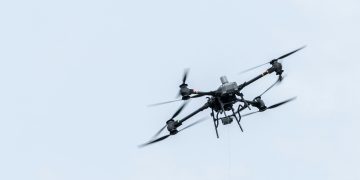






Drone technology is steadily moving beyond last‑mile novelty projects to play a significant role in mid‑mile logistics, where autonomous aircraft carry goods between major hubs such as warehouses, distribution centres and clinics. Industry observers report that unmanned aerial vehicles (UAVs) can bridge gaps in conventional transport by flying scheduled routes over distances of 20–120 km, offering faster, more flexible and potentially more cost‑effective alternatives to trucks on congested roads.
Unlike traditional last‑mile drones that deliver directly to consumers’ doorsteps, mid‑mile drones operate between secure logistics nodes where regulatory approval for beyond‑visual‑line‑of‑sight (BVLOS) flights is easier to obtain. These routes are suited for frequent, repeatable cargo runs such as restocking inventory between centres or ferrying urgent medical supplies between hospitals and warehouses. The focus on established corridors helps address safety, airspace and operational compliance while leveraging autonomy and reliable performance.
Mid‑mile drone platforms today carry moderate payloads — often between roughly 5 kg and 50 kg — using fixed‑wing, hybrid or VTOL configurations that balance range and lift capability. Advances in autonomy, navigation sensors and airspace management are also making BVLOS operations more predictable, and improved battery systems or hybrid powertrains are helping extend range and reduce dependency on ground infrastructure.
Industry participants say mid‑mile drone operations could complement existing freight networks, particularly where road congestion, difficult terrain or infrastructure bottlenecks slow conventional transport. By automating flights between logistics hubs and avoiding surface delays, these systems may shorten lead times, enhance inventory responsiveness and support just‑in‑time replenishment strategies for critical goods.
#Breakingnews #SupplyChainNews #DroneLogistics #MidMileInnovation #LogisticsTechnology