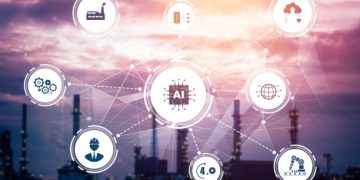






The rapid growth of artificial intelligence infrastructure is broadening demand beyond computing hardware to include liquid cooling, power management, energy storage, and data-center electrical systems.
As next-generation artificial intelligence systems require higher computing capacity and greater power density, liquid cooling is becoming an increasingly important part of data-center infrastructure. Industry estimates indicate that liquid cooling penetration for artificial intelligence chips could reach 53% in 2026, up from approximately 33% in 2025, creating additional opportunities across cooling components, pumps, piping, cold plates, and thermal management systems.
Power infrastructure is also becoming a central part of the artificial intelligence supply chain. Higher-density computing racks are encouraging the development of 800-volt direct-current power architectures, alongside power supply units, power shelves, battery backup systems, and high-voltage protection equipment. These technologies are designed to support efficient power distribution as computing requirements continue to increase.
The shift is creating a broader procurement ecosystem for data centers, linking semiconductor suppliers with cooling specialists, power-equipment manufacturers, electrical infrastructure providers, and energy-storage developers. This expansion means data-center projects increasingly require coordinated sourcing across computing, electricity, thermal management, and grid connectivity.
Power supply units and power shelves are among the technologies positioned closest to near-term deployment, while battery backup systems can provide short-duration support for fluctuations in computing loads. High-voltage direct-current circuit protection is also gaining attention as data centers explore higher-voltage power architectures.
At the same time, solid-state transformers and direct-current microgrids represent longer-term opportunities as data-center power systems continue to evolve. Their development could further connect artificial intelligence infrastructure with broader electricity networks and energy-management systems.
The growing integration of cooling and power systems is also encouraging manufacturers to consider supply-chain planning earlier in the data-center development cycle. Equipment availability, component sourcing, electrical capacity, thermal requirements, and energy infrastructure are increasingly interconnected when determining the timing and scalability of new facilities.
The trend also extends into industrial electronics and power-management components. Recent results from the sector indicate that rising artificial intelligence infrastructure investment is supporting demand for technologies used in power distribution, energy management, and industrial control.
Overall, the artificial intelligence supply chain is developing into a wider infrastructure ecosystem. Computing hardware remains central, while cooling, power delivery, energy storage, electrical protection, and grid infrastructure are becoming increasingly important components of the overall value chain.
As data centers expand, suppliers across these segments are gaining opportunities to participate in the next phase of infrastructure development, strengthening connections between technology manufacturing, energy systems, and global supply-chain networks.
#ArtificialIntelligence #AISupplyChain #DataCenters #LiquidCooling #PowerInfrastructure #SupplyChainDigitalization #Technology #EnergyInfrastructure #Semiconductors #DataCenterInfrastructure