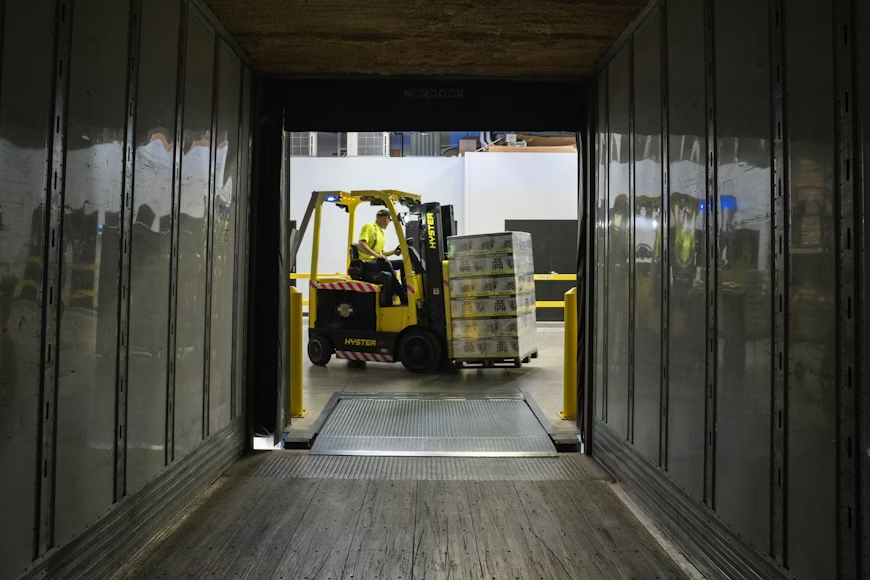







The global forklift market is undergoing significant transformation as trade policy shifts, accelerated electrification and divergent regional demand patterns reshape competitive dynamics and supply chain strategies, according to recent industry analysis. Factors such as tariff changes, sustainability targets and evolving freight requirements are driving strategic adjustments across manufacturing and logistics sectors.
In key export markets, newly introduced tariffs on certain imported forklifts have altered cost structures and influenced procurement decisions, eroding traditional pricing advantages and prompting buyers to rethink sourcing footprints. This trade policy environment has encouraged greater emphasis on regional production and supply chain diversification to mitigate exposure to duty volatility and extended delivery cycles.
Electrification of material handling equipment continues to gather pace, as warehouse operators increasingly opt for battery-powered trucks to support sustainability objectives and lower total operating costs. While adoption varies across regions, Europe and Asia are leading the shift toward zero-emission powertrains, propelled by environmental regulations and incentive programs that support the transition from internal combustion engine models to electric units.
Regional demand patterns also show distinct divergence. In North America, elevated financing costs and tariff-related uncertainty have dampened near-term equipment investment, while growth remains more robust in parts of Europe, Japan and Southeast Asia, where industrial automation and logistics infrastructure expansion are supporting stronger forklift demand.
Another emerging driver is the aftermarket and service segment, as forklifts supplied during recent deployment surges enter routine maintenance and component replacement cycles. This shift is creating additional revenue streams for service providers and reinforcing the importance of lifecycle asset management in material handling networks.
Overall, supply chain stakeholders say that flexibility in sourcing, investment in electrified fleets and careful navigation of tariff environments will be essential for maintaining competitive material handling operations as the industry adapts to both short-term pressures and long-term structural change.
#Breakingnews #SupplyChainNews #LogisticsUpdate #ForkliftMarket #TradePolicyNews