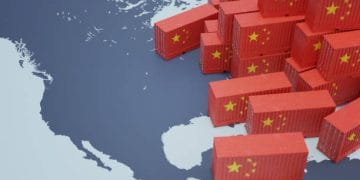







China’s foreign trade has expanded significantly over the past seven decades, establishing the country as a major hub for global manufacturing, production, and supply chain operations.
The country’s goods trade grew from approximately US$1.1 billion in 1950 to more than US$6 trillion in 2025, accounting for 18.2% of global trade. Its extensive industrial base continues to supply international markets with consumer goods, industrial equipment, electronics, and renewable energy technologies.
Technology is increasingly driving this growth. Exports of electric vehicles, lithium batteries, wind power equipment, and advanced electronics reflect a shift towards higher-value products, supported by investments in automation, artificial intelligence, and digital manufacturing.
Digital trade is also transforming international distribution. Cross-border e-commerce, overseas warehouses, and intelligent logistics systems are helping businesses reach overseas buyers more efficiently, improve delivery times, and expand their market access.
Beyond exports, China’s position as a major import market connects international suppliers with manufacturers and consumers, reinforcing its role in global production networks. However, geopolitical uncertainty and trade protectionism continue to highlight the importance of resilient supply chains and international cooperation.
As China advances its technological and green manufacturing capabilities, its evolving trade model demonstrates how innovation, logistics, and industrial development are reshaping global commerce.
#GlobalTrade #SupplyChain #ChinaTrade #Logistics #Manufacturing #InternationalTrade #DigitalTransformation #SupplyChainResilience #GreenTechnology