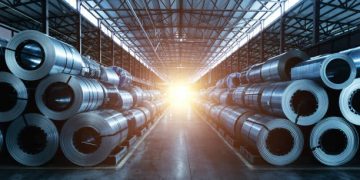






The Canadian government has announced a new financial assistance package to support the steel, aluminum, and copper industries as businesses continue to face challenges from expanded U.S. tariffs on industrial products. The latest measures are intended to help manufacturers manage rising costs and maintain operations amid ongoing trade uncertainty.
Industry Minister Melanie Joly announced the package during a visit to a manufacturing facility in Vars, Ontario. As part of the plan, the government will introduce a $1 billion loan program through the Business Development Bank of Canada. The program will provide companies affected by the tariffs with access to financing on favorable terms for at least the next three years, helping businesses continue production and protect jobs.
The government is also launching a separate $500 million fund designed to help companies make strategic adjustments as access to the U.S. market becomes more difficult. Officials said the funding will support businesses looking to diversify operations, explore new markets, and adapt to changing trade conditions.
Isabelle Hudon, president and CEO of the Business Development Bank of Canada, said the funding will help companies remain operational and ensure that steel and aluminum producers can continue contributing to the economy.
The latest announcement follows earlier measures introduced by Ottawa to support domestic industries affected by U.S. trade policies. Previous actions included tariffs on selected Chinese steel imports and the rollout of a $5 billion strategic response fund aimed at strengthening key industries.
Canadian officials said additional action became necessary after U.S. President Donald Trump expanded tariffs last month to include more products such as steel coils and aluminum sheets that were previously exempt. The expanded tariffs have created higher border costs for Canadian manufacturers, including tool and mold makers.
When asked about the future of the tariffs, Joly said Canada remains focused on supporting local industries while trade discussions continue. She noted that decisions on U.S. tariff policies remain outside Canada’s control.
Raquel Dancho, the Conservative industry critic, said long-term stability will depend on reaching a trade agreement with the United States.
The Canadian Steel Producers Association welcomed the government’s financial package, saying it would help businesses manage the growing impact of tariffs. The group also urged additional protections against foreign steel imports to strengthen the domestic market.
According to Statistics Canada, steel exports to the U.S. have declined significantly since the tariffs were introduced, falling to nearly one-third of previous levels. Algoma Steel has also announced workforce reductions as a result of weaker demand.
Meanwhile, data from the World Steel Association showed U.S. steel production increased by three percent in 2025, while research from the Tax Foundation estimated the tariffs have contributed to job losses in the United States.
#SupplyChainNews #NewsUpdate #Tariffs #SteelIndustry #GlobalTrade


