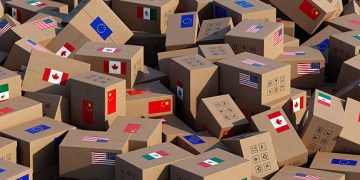






New York — U.S. stock index futures traded lower on Sunday night after the announcement of an increase in global tariff rates. Dow Jones futures fell, along with S&P 500 futures and Nasdaq futures, as markets reacted to updated trade policy developments.
Over the weekend, the global tariff rate was raised to 15%, following an earlier announcement setting a 10% duty. The new rate is scheduled to take effect on Tuesday and includes several exemptions. Market participants are monitoring potential impacts on international trade flows and corporate earnings.
Market Performance Last Week
The broader stock market ended the previous week with gains, led by technology shares. The S&P 500 reclaimed a key technical level on Friday. Market sentiment was influenced by a combination of trade policy developments, energy price movements, and financial sector concerns.
Oil prices increased earlier in the week amid geopolitical uncertainty, while concerns related to private credit markets also contributed to volatility.
Focus on Corporate Earnings
Attention this week is expected to center on upcoming earnings results from major technology companies, particularly Nvidia, which may influence sentiment across the artificial intelligence sector. Companies linked to semiconductor manufacturing, AI infrastructure, and cloud computing are also being closely watched by investors.
Shares of several technology and infrastructure firms remain featured on prominent market leaderboards and sector indexes.
Futures and Commodity Markets
As of Sunday evening, Dow Jones futures were down 0.6% from fair value. S&P 500 futures declined 0.7%, while Nasdaq 100 futures fell 0.9%.
Crude oil futures edged lower by about 1% amid a lack of new developments over the weekend. Meanwhile, Bitcoin prices declined to approximately $65,000 after trading in a higher range earlier in the weekend.
Market analysts note that movements in futures trading do not always translate directly into the direction of the next regular trading session.
Tariff Policy Developments
Following a recent court decision that invalidated tariffs imposed under a specific emergency authority, new tariff measures were introduced under a different legal framework. Officials indicated that additional trade adjustments may be announced in the coming months as part of broader policy changes.
The revised global tariff rate, now set at 15%, includes exemptions and is expected to remain subject to further legal and administrative review. Administration officials stated that additional trade measures may be evaluated and implemented under alternative authorities.
Trade partners are expected to respond to the updated measures, and negotiations may continue regarding existing bilateral agreements.
#SupplyChainNews #MarketUpdate #TradePolicy #StockMarket #GlobalEconomy