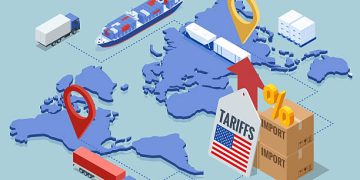






The United States is strengthening supply chain monitoring as authorities focus on improving visibility into goods that move through multiple countries before reaching the U.S. market.
A recent government report estimates that goods transshipped through third countries could represent between $34 billion and $303 billion in annual trade value. Using a central estimate of $75 billion, the report projects potential tariff revenue of approximately $19 billion to $26 billion annually.
The review identifies around 40 countries as having elevated exposure to transshipment activity, particularly where products or components undergo limited processing, relabeling, or repackaging before entering the United States.
The development highlights the growing importance of supply chain transparency and accurate origin information. As manufacturers and distributors expand sourcing networks across multiple markets, businesses are placing greater emphasis on documenting product origins, production processes, and cross border movements.
Technology is also becoming an important part of customs monitoring. U.S. Customs and Border Protection is deploying artificial intelligence tools to analyze container markings, packaging patterns, and X ray images. These systems are designed to identify differences between declared cargo information and the physical characteristics of shipments.
The increased focus on traceability reflects broader changes in global sourcing patterns. U.S. imports from China declined to $308.7 billion in 2025, while imports from markets including Mexico and Vietnam increased in recent years.
For supply chain operators, stronger visibility across suppliers, manufacturers, logistics providers, and trade routes can support more accurate customs documentation and origin verification. Digital tools and data driven monitoring are also creating new opportunities to strengthen compliance throughout international supply networks.
As cross border supply chains continue to diversify, reliable product data, transparent sourcing practices, and technology enabled customs processes are becoming increasingly important components of modern international trade.
#SupplyChainTransparency #SupplyChain #GlobalTrade #InternationalTrade #TradeCompliance #Customs #Tariffs #ImportExport #SupplyChainVisibility #TradeRegulations #Sourcing #DigitalTrade #AIinTrade #CustomsCompliance