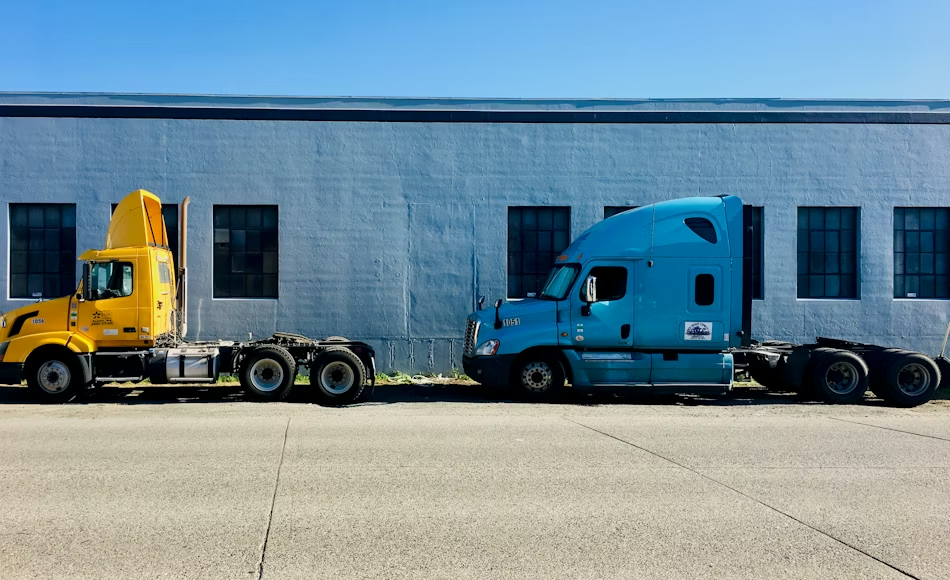







The U.S. trucking sector is increasingly exploring practical applications of artificial intelligence (AI) to boost operational efficiency, automate manual tasks and support decision‑making across freight fleets and logistics networks. Emerging AI tools are being adopted in everything from dispatching and routing to paperwork automation and safety systems, marking a shift toward data‑driven transport operations.
According to recent industry reporting, transportation providers now have access to a broad menu of AI‑enabled capabilities that can be integrated into existing software platforms and management workflows. These solutions — ranging from automated communication tools to intelligent routing assistants — are designed to reduce administrative burden and help carriers respond more quickly to dynamic freight conditions.
One of the most visible changes is in dispatch and planning systems, where AI is being used to identify optimal load assignments, adjust routes in real time and improve asset utilisation. By analysing large datasets from telematics, load boards and historical performance, AI tools can streamline decision‑making and reduce empty miles — a longstanding inefficiency in the trucking sector.
In addition to planning functions, AI is helping to automate back‑office processes such as document classification, communications handling and billing tasks that have traditionally consumed significant human labour. These automations can free up staff to focus on strategic functions and customer service, contributing to improved productivity and profitability.
However, industry leaders caution that successful AI implementation still depends on quality data and strong integration with core systems like transportation management software (TMS). Companies that invest in clean, connected data architectures are better positioned to unlock the full potential of AI solutions and embed intelligent insights into everyday logistics operations.
As trucking companies continue to adopt and refine AI tools, the technology is expected to play an increasingly central role in managing cost pressures, improving service reliability and supporting the next generation of freight automation.
#BreakingNews #SupplyChainNews #TruckingUpdate #AIinLogistics #LogisticsTechnology