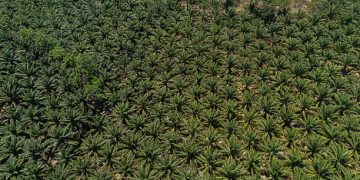






Palm growers in southern Thailand are calling on the government to remove controls on crude palm oil exports after prices for fresh fruit bunches dropped sharply following the policy’s introduction. Farmer groups warned that they may stage a protest at the Commerce Ministry after the Songkran holiday if their concerns are not addressed and a policy adjustment is not announced.
The dispute follows an April 7, 2026 decision by the Central Committee on Prices of Goods and Services to impose controls on crude palm oil exports. Authorities said the measure was aimed at supporting energy security and managing living costs. However, grower representatives said the move had an immediate impact on domestic pricing, leading to a rapid decline in fresh fruit bunch prices and affecting producers across multiple southern provinces.
Athirat Damdee, president of the Krabi Palm Oil Growers Association and a leader of the Southern Palm Oil Growers and Collection Yards Network, said the price of fresh fruit bunches at collection yards fell from 8.90 baht to 7.00 baht per kilogram within four days of the policy announcement. According to the network, the drop has translated into estimated losses of up to 120 million baht per day for farmers, amounting to nearly 500 million baht over several days.
Grower representatives said the price decline has created immediate financial pressure for producers, collection yards, and related businesses throughout the palm oil supply chain. They also expressed concern that continued export restrictions could disrupt long-term trading relationships and reduce confidence among overseas buyers. The network estimated that more than 50 billion baht in annual trade value could be at risk if the situation persists.
In response, the Southern Palm Oil Growers and Collection Yards Network submitted four proposals aimed at stabilizing prices and restoring balance to the market. The first proposal calls for easing or removing export controls to allow normal trading flows and protect existing export customers. Growers said this step would help absorb surplus supply and support price recovery.
The second proposal recommends designating B10 as the standard diesel blend. Grower representatives said this would allow the energy sector to absorb surplus output estimated at around 60,000 tonnes per day. They described this approach as a market-based mechanism that could support prices without direct intervention.
The third proposal involves restructuring the pricing system using a quality-linked model. The network suggested ending daily state-directed pricing and adopting a mechanism proposed by the National Farmers Council, under which raw material prices would move more closely in line with downstream palm oil products. Growers said this system would improve transparency and reduce volatility in farm-gate prices.
The fourth proposal calls for expanding biodiesel production using domestic raw materials. Grower representatives urged the government to support the use of locally produced ethanol and alcohol in place of imported, higher-cost chemicals. They said this strategy would strengthen domestic demand for palm oil while supporting local industries and reducing reliance on imports.
Farmer leaders also said that cost-of-living concerns could be addressed through targeted subsidies or welfare programs rather than market interventions affecting raw material prices. They argued that price controls on exports shift the burden onto producers and could impact more than 100,000 farming households nationwide.
The statement outlining the proposals was signed by representatives from palm grower associations in several southern provinces, including Krabi, Trang, Surat Thani, Chumphon, and Nakhon Si Thammarat. The network requested a clear response from the government within the week and said farmers and allied groups are prepared to travel to Bangkok to present their concerns if no action is taken.
Grower representatives emphasized that their request is focused on restoring balance within the palm oil production structure and ensuring fair price transmission across the supply chain. They said stable and transparent market conditions are essential to maintaining farmer incomes, supporting collection yards, and preserving export competitiveness.
The group added that it is seeking policy adjustments that support both producers and consumers, while allowing the palm oil market to function more effectively. They noted that timely engagement between authorities and industry stakeholders could help prevent further escalation and maintain stability in the agricultural and energy sectors.
#SupplyChainNews #AgricultureNews #PalmOilMarket #ThailandEconomy #CommodityPrices