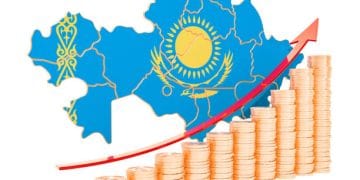




Kazakhstan’s recent parliamentary election is opening a new phase for economic cooperation, with critical minerals, transport infrastructure, and international supply chains emerging as key areas of opportunity.
The August 23 election established the country’s new 145-seat Kurultai under the constitution that took effect in July. The new legislative structure is expected to influence policies covering investment, infrastructure development, business activity, and economic modernization.
For international trade partners, Kazakhstan’s evolving institutional framework could support greater engagement across investment and supply chain projects. The country’s strategic position between China, the Caspian region, South Asia, and Europe also gives it an important role in developing alternative trade routes across Eurasia.
Critical minerals represent one of the strongest areas for potential cooperation. Kazakhstan has substantial mineral resources used across technology, energy, and industrial applications. Expanding cooperation could move beyond resource exports toward geological exploration, processing, technology transfer, investment, and higher-value manufacturing.
Transport connectivity is another major opportunity. The Middle Corridor, linking Central Asia with markets farther west through the Caspian Sea, is gaining importance as an emerging trade and logistics route. Kazakhstan is positioned to benefit from investments in railways, ports, logistics facilities, and related infrastructure that can strengthen connections between producers and international markets.
The continued development of this corridor could also create opportunities for public-private partnerships, private investment, and international financial participation. Infrastructure development and efficient logistics will remain important to increasing trade capacity along the route.
Kazakhstan’s expanding economic engagement with the United States comes as Washington places greater emphasis on diversifying critical mineral sourcing and strengthening international supply networks. Cooperation in minerals, transportation, energy, technology, and investment could therefore become increasingly important to both economies.
The new Kurultai will have an important role in shaping the policy environment surrounding investment protection, infrastructure, business development, public administration, and economic modernization.
With its resource base and strategic geographic position, Kazakhstan is positioned to strengthen its role as a Central Asian hub for critical minerals, logistics, and international trade, while the development of the Middle Corridor could further connect the country to global supply chains.
#KazakhstanTrade #SupplyChain #MiddleCorridor #CriticalMinerals #GlobalTrade #CentralAsia #TradeRoutes #Logistics #Infrastructure #InternationalTrade #ForeignInvestment #SupplyChainResilience