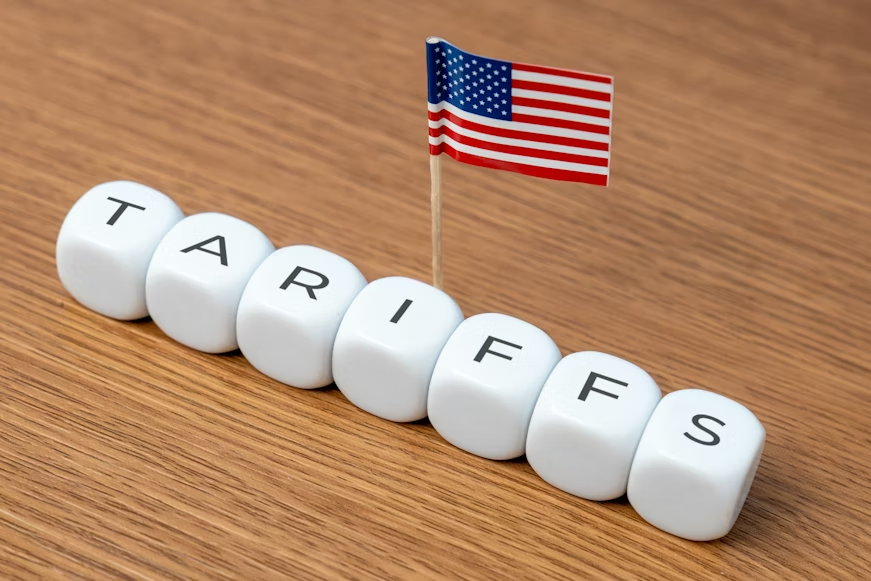







Recent adjustments in U.S. trade policy have introduced significant uncertainty for global supply chains, with government officials announcing a temporary pause on the implementation of most newly proposed tariffs — while simultaneously raising duties on imports from China to exceptionally high levels.
Under the revised approach, the United States will temporarily suspend the rollout of higher tariff rates on dozens of trading partners for a 90-day period, maintaining a baseline tariff of around 10 % on goods from those countries during the pause. This move is intended as a window for negotiation with international partners and a step toward stabilising unpredictable tariff pressures that had unsettled markets.
In contrast, the U.S. administration escalated trade measures against China by raising tariffs on Chinese imports to roughly 125 %, excluding Beijing from the tariff pause. Officials framed this decision as a response to China’s earlier retaliatory duties and its stance in ongoing trade disputes.
The announcement drew a swift reaction in global financial markets: equity indices rallied immediately after news of the tariff pause, signalling investor relief that tariff escalation would be limited for many countries; however, market volatility persisted as heightened duties on Chinese goods and broader geopolitical tensions weighed on confidence.
Trade experts warn that such sharp swings in tariff policy can reverberate through global supply chains, impacting sourcing decisions, inventory strategies, and cross-border logistics planning. Regions with complex supply networks and companies heavily reliant on trade with China and the United States could face higher operational costs and compliance challenges as businesses adjust to the new tariff landscape.
While the temporary tariff pause offers breathing room for negotiation with many trading partners, the ongoing trade standoff with China — marked by raised tariffs on both sides — highlights the continuing fragility of global trade relations and the need for supply chain resilience amid shifting policy risks.
#Breakingnews #SupplyChainNews #TradePolicy #LogisticsUpdate #GlobalMarkets