






by supplychainreport
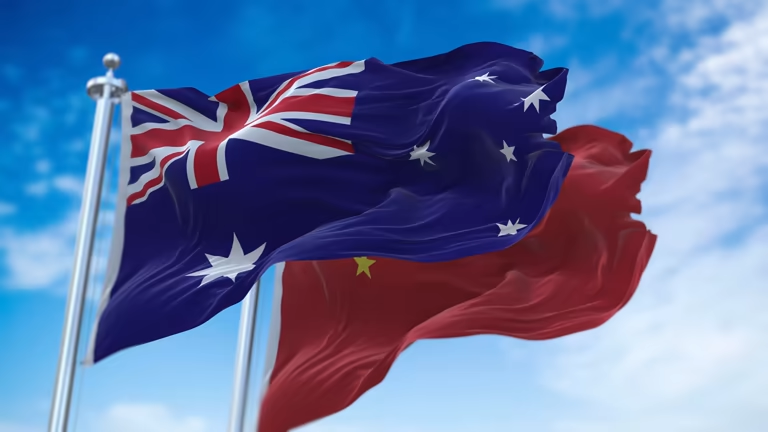
China’s Ambassador to Australia, Xiao Qian, highlighted on Tuesday that U.S. trade policies toward China and other countries may have implications for bilateral economic and trade relations between Canberra and Beijing.
Speaking at a press conference in Canberra, Xiao said, “U.S. policy on trade with China, and with other countries as well, will have an impact, and that is an important element that we have to consider.” He emphasized that shifts in trade measures, including tariffs, are among the factors shaping global trade dynamics that Australia and China must navigate together.
Xiao’s comments followed U.S. President-elect Donald Trump’s announcement of plans to impose additional tariffs, including a 10% levy on certain Chinese imports and 25% tariffs on products from Mexico and Canada. While the focus was on U.S.-China trade, Xiao noted that these policies could indirectly affect Australia’s economic engagement with China, given the interconnected nature of global supply chains.
Trade experts suggest that changes in U.S. trade policy often influence regional trade flows, investment decisions, and supply chain planning. For Australia, which maintains close trade ties with both the U.S. and China, understanding these developments is critical for economic forecasting and strategic planning.
Xiao added that China remains committed to working constructively with Australia to maintain stable and mutually beneficial trade relations. Both countries have a history of collaboration in sectors such as agriculture, education, and technology, which could be affected by broader shifts in global trade policies.
“As global trade evolves, it’s important for countries to consider multiple factors and maintain dialogue to support balanced economic growth,” Xiao said. His remarks underscore the role of trade diplomacy in ensuring that international trade partnerships remain productive and resilient.
#SupplyChainReport #TradeNews #USChinaRelations #BilateralTrade #EconomicUpdate


