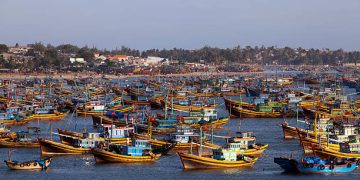






Vietnam is positioning its maritime sector as a strategic engine for logistics, international trade and sustainable economic growth, with its geographic location offering opportunities to strengthen connections between global markets.
With more than 3,260 kilometers of coastline and access to major international shipping routes, Vietnam has an opportunity to develop beyond traditional resource-based maritime activities and build a more integrated ocean economy.
The strategy focuses on developing global logistics gateways, international transshipment hubs, maritime services, free trade zones and offshore renewable energy, creating stronger links between trade, technology, finance and transportation.
A stronger network of maritime infrastructure could help Vietnam capture greater value from international cargo flows while improving connectivity for manufacturers, exporters and regional supply chains.
The shift also reflects a broader move toward a technology-driven and sustainable blue economy. Investments in ocean data, marine technology, renewable energy and logistics services could create new economic opportunities while reducing reliance on finite natural resources.
For global supply chains, Vietnam’s location offers potential to become an increasingly important regional trade and logistics hub, supporting the movement of goods, capital and technology across the Asia-Pacific.
#SupplyChain #Vietnam #GlobalTrade #Logistics #MaritimeTrade #OceanEconomy #BlueEconomy #TradeInfrastructure #Shipping #AsiaPacific #SupplyChainResilience