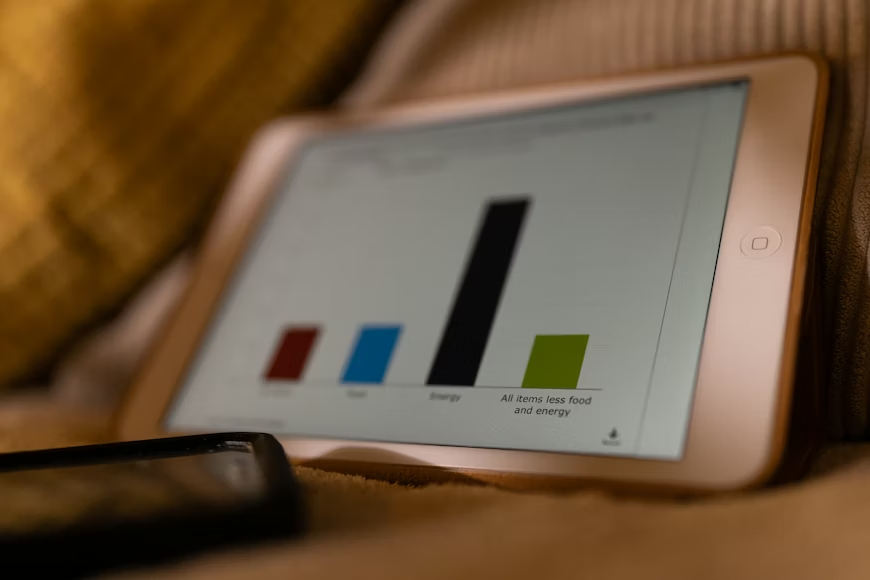







The latest Consumer Price Index (CPI) report from the U.S. Bureau of Labor Statistics revealed that inflation remained elevated in 2025, with the CPI for all urban consumers rising 2.7 % year-over-year — a continuation of price pressures across key household spending categories.
The annual increase was driven by higher costs in several areas critical to consumer budgets. Shelter costs rose, contributing to December’s month-over-month CPI gain, while food prices climbed 3.1 %, an acceleration from the prior year’s increase. Energy prices also moved higher overall, even as some components like gasoline saw declines during the period.
Breaking down the components further:
- Food at home costs grew at a faster pace compared with 2024, and food away from home also became more expensive, indicating broad-based pressures in the food segment.
- Energy indexes, including electricity and natural gas, recorded notable increases after a prior period of declines, contributing meaningfully to the overall CPI rise.
- Core inflation — which excludes the volatile food and energy categories — rose about 2.6 %, showing that underlying price pressures beyond the most volatile components remain persistent.
For supply chain and logistics stakeholders, persistent inflation has implications for operational costs and pricing strategies. Transportation capacity tightening in late 2025 — with reports of capacity indices falling to multi-year lows — contributed to rising freight prices, suggesting that cost pressures throughout goods movement networks may help sustain inflationary trends.
Economists and planners will be watching how CPI trends evolve in 2026, particularly in relation to wage dynamics, energy markets and global commodity pricing, all of which intersect with freight, manufacturing and retail supply chains.
#Breakingnews #SupplyChainNews #InflationUpdate #CPIReport #LogisticsCosts


