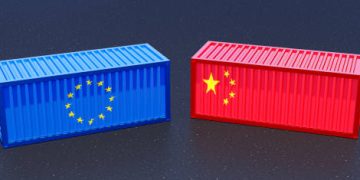







Supply Chain Report – The 2024 European Parliament elections have brought significant changes to EU-China relations. The rise of far-right and nationalist parties within the EU Parliament introduces a more fragmented political landscape, which is shaping policy toward China with increased scrutiny and caution. Despite this, economic interdependence and the need for stable trade relations remain critical for both sides.
High-level dialogues and bilateral meetings across Europe reflect a complex balance between competition and cooperation. Germany, Italy, France, Ireland, and other EU member states have engaged with Chinese officials on trade, investment, and industrial collaboration, highlighting the importance of regional priorities alongside EU-wide policies. These engagements focus on sectors such as artificial intelligence, green energy, pharmaceuticals, agriculture, and advanced manufacturing, aiming to enhance supply chain resilience and foster technological cooperation.
Trade tensions persist in several industries. China has imposed duties on EU pork and dairy products, citing alleged unfair pricing and subsidies, while the EU maintains tariffs on Chinese electric vehicles, medical devices, and rare earth exports. Investigations into foreign subsidies and anti-dumping practices illustrate the growing scrutiny over market distortions. Companies navigating this environment must be prepared for evolving regulations, potential tariffs, and sector-specific trade measures.
European SMEs face particular challenges operating in China, including regulatory uncertainty, financing constraints, and competition from local firms. Survey data shows that SMEs cluster in major Chinese cities like Shanghai, Beijing, and Guangzhou but are increasingly exploring opportunities in second-tier cities, provided they can manage administrative and operational hurdles. Late payments and high intellectual property costs remain ongoing concerns, emphasizing the need for clear regulations and support mechanisms.
Amid trade disputes, China has also taken steps to encourage business engagement, such as extending visa-free policies for citizens of multiple European countries, facilitating easier travel for business, tourism, and cultural exchanges. EU-China summits and business symposia have further highlighted the importance of direct dialogue in resolving trade frictions, improving mutual understanding, and identifying commercial opportunities.
The broader geopolitical context is equally important. Both the EU and China are navigating strategic competition, technological development, climate commitments, and regional security concerns. Multilateral cooperation, adherence to fair trade rules, and sustainable growth are recurring themes in ongoing discussions. Leaders from both sides continue to emphasize the importance of stability, transparency, and predictability for global trade, while seeking to address structural imbalances and promote resilient supply chains.
As EU-China relations evolve post-2024 elections, companies, policymakers, and investors must remain agile. Strategic engagement, diversification, and a clear understanding of regulatory frameworks will be critical to navigate this complex, high-stakes environment, where economic opportunity intersects with geopolitical considerations.
#EUChinaRelations #GlobalTrade #SupplyChainResilience #InternationalTrade #TradePolicy


