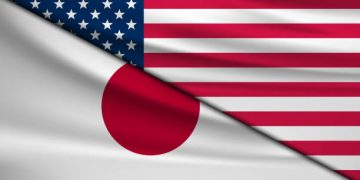







Japan is expected to proceed with its USD 550 billion investment and loan pledge to the United States despite a recent U.S. Supreme Court ruling that found certain reciprocal tariffs unconstitutional.
The court determined that the International Emergency Economic Powers Act (IEEPA) does not grant the U.S. president authority to impose the 15 percent reciprocal tariffs that had been applied to a broad range of Japanese goods. The decision could affect the legal foundation of the existing bilateral tariff agreement between the two countries.
The Japanese government is closely monitoring developments following the ruling and has requested assurances from Washington that the decision will not negatively impact Japanese companies operating under the agreement. Officials in Tokyo indicated that the situation will be handled carefully to avoid disrupting the tariff deal reached after extensive negotiations.
While the court ruling addressed tariffs imposed under the IEEPA, sector-specific tariffs remain in place under Section 232 of the Trade Expansion Act. These measures, which apply to industries such as automotive manufacturing, are not directly affected by the court’s decision.
Following the ruling, the U.S. administration announced plans to introduce additional tariffs on trading partners to replace the reciprocal tariffs. The new measures were initially set at 10 percent and later adjusted to 15 percent, according to public statements. Japanese officials had anticipated the possibility of alternative legal grounds being used to maintain tariff policies.
Japan’s Trade Minister, Ryosei Akazawa, who oversees negotiations with the United States, previously noted that there could be other legal mechanisms available to support tariff implementation.
Earlier this week, Japan announced it would invest USD 36 billion across three projects as the first installment of its broader USD 550 billion pledge. According to a source familiar with the bilateral discussions, the selected projects are intended to serve the national interests of both countries. The Japanese government plans to continue coordinating with U.S. counterparts to determine additional projects under the investment and loan framework.
The United States has applied tariffs to a wide range of products, including steel, aluminum, and pharmaceuticals, while granting relief for certain Japanese goods. Observers noted that some exemptions appear to reflect the broader economic relationship between the two countries.
Several Japanese companies have challenged the tariffs in U.S. courts. Among them, Toyota Tsusho Corp. has sought refunds for tariffs already paid. Following the recent ruling, the company stated that it would continue to monitor the situation and respond accordingly, as formal refund procedures have yet to be clarified.
Market analysts indicate that both governments are likely to continue dialogue to manage trade policy stability and minimize disruptions to bilateral economic ties.
#SupplyChainNews #TradePolicy #GlobalTrade #TariffUpdate #EconomicRelations