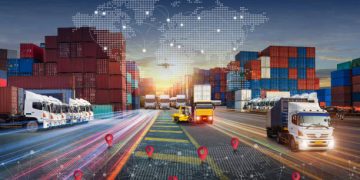






Global supply chains are increasingly turning to data-driven logistics strategies as freight movement between major urban centers faces mounting pressure from urbanization, stricter environmental regulations, and growing transport restrictions. As traditional freight planning becomes less effective, the industry is embracing intelligent technologies to improve network efficiency, resilience, and sustainability.
Supply chain operations continue to encounter challenges caused by fragmented data, unpredictable traffic conditions, underutilized transport capacity, and the need to reduce emissions without compromising service reliability. Disconnected systems often limit coordination between logistics partners, while congestion, inaccurate delivery estimates, and restricted delivery windows contribute to delays that ripple across distribution networks.
Industry experts note that one of the biggest inefficiencies stems from the disconnect between transport planning and real-world vehicle operations. Standard navigation systems frequently overlook heavy vehicle restrictions such as bridge clearances, weight limits, and regulated delivery schedules, forcing drivers to take longer routes that increase fuel consumption, transportation costs, and delivery times. Even minor routing errors can disrupt downstream supply chain activities and impact overall operational performance.
To address these challenges, logistics providers are increasingly adopting commercial-grade mapping, cloud-based platforms, artificial intelligence, and real-time data analytics to optimize freight movement. These technologies enable more accurate route planning before departure, helping reduce empty miles, improve compliance with transport regulations, and enhance fuel efficiency throughout the supply chain.
Integrated digital logistics platforms are also improving collaboration between shippers, carriers, and distribution facilities by providing end-to-end visibility across freight operations. Through shared data and AI-powered decision-making, transport capacity can be matched more efficiently with demand, reducing empty vehicle movements while improving delivery accuracy and network utilization.
Warehouse and distribution center operations are also benefiting from intelligent scheduling systems that synchronize vehicle arrivals with dock availability. By automatically adjusting delivery appointments based on real-time traffic conditions and shipment progress, logistics facilities can minimize congestion, reduce truck idling, and improve asset utilization, supporting faster and more reliable supply chain execution.
As supply chains become increasingly interconnected, the integration of real-time visibility, predictive analytics, and intelligent routing is transforming freight operations into more agile, transparent, and sustainable networks. The continued adoption of digital logistics technologies is expected to play a critical role in improving supply chain resilience while meeting the growing demands of modern commerce.
#SupplyChain #Logistics #SmartLogistics #DigitalSupplyChain #Freight #Transportation #AI #DataAnalytics #WarehouseManagement #SupplyChainVisibility #Sustainability #UrbanLogistics #FreightTechnology #SupplyChainResilience