


• Latest
  • Trending
  • All
  • Industry
  • Compliance
  • Global Trade
  • Industry
  • Sustainability & Ethics
  • Video
  • Security & Risk
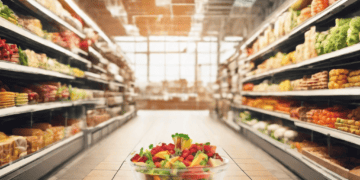
Fresh fruit salad in a glass bowl in a supermarket aisle. Blockchain technology improves food supply chain transparency. - Supply Chain News

Blockchain Technology in the Food Industry: Enhancing Transparency and Efficiency

04/26/2023
China Resumes Canadian Canola Imports After Trade Tensions Ease

China Resumes Canadian Canola Imports After Trade Tensions Ease

01/29/2026
Port of Montreal Posts Container Growth in 2025 Despite Global Trade Uncertainty

UAE Logistics Network Expands Pakistan Shipping Options Through New Partnership

01/29/2026
UK Rail Freight Interchange Project Seeks Government Decision Amid Infrastructure Debate

Saudi Rail Authority Issues Tender for 10 New Passenger Trains to Boost Northern Network Capacity

01/29/2026
U.S. Trade Gap Nearly Doubles in Latest Data as Imports Outpace Exports

U.S. Trade Gap Nearly Doubles in Latest Data as Imports Outpace Exports

01/29/2026
U.S. Truck Parking Expansion Funding at Risk Amid Congressional Budget Battle

U.S. Truck Parking Expansion Funding at Risk Amid Congressional Budget Battle

01/29/2026
U.S. Weekly Rail Traffic Falls 4% as Intermodal and Carload Moves Slow Early in 2026

U.S. Major Rail Carrier to Submit Revised Merger Application in March After Regulatory Setback

01/29/2026
Global EV Market’s Continued Renaissance

New Truck‑to‑Air Multimodal Service Emerges on Asia–Europe Trade Lane

01/29/2026
Transportation Mergers & Acquisitions Set to Rise in 2026 as Deal Activity Heats Up

U.S. Trucking Regulator Stands Firm on Foreign Driver Rules Despite Multi‑State Pushback

01/30/2026
UK Postal Delays Over Christmas Hit Highest Levels in Five Years, Consumer Watchdog Warns

UK Postal Delays Over Christmas Hit Highest Levels in Five Years, Consumer Watchdog Warns

01/29/2026
Global Survey Shows 60% of Executives Prioritise Cyber Risk as Strategic Threat

Global Survey Shows 60% of Executives Prioritise Cyber Risk as Strategic Threat

01/29/2026
Electric Truck Fleet Expansion in Japan Highlights Logistics Decarbonisation Push

Canadian Trucking and Logistics Sector Loses Nearly 17,000 Jobs in December

01/30/2026
Parcel Network Reaches 90% Automation Target, Boosting Processing Capacity

Supply Chain Disruption Is Prompting Strategic Shifts Across the Americas

01/29/2026
supplychainreport
Sunday, February 1, 2026
  • Home
  • Industry
    • Supply Chain
    • Logistics & Transportation
    • Importing & Exporting
    • Manufacturing
    • Warehousing & Distribution
  • Compliance
    • Supply Chain Transparency
    • Anti-Money Laundering (AML)
    • Know Your Customer (KYC)
    • Risk Management
    • Export Controls
    • Sanctions
  • Global Trade
    • Market Trends
    • Economic Indicators
    • Sourcing
    • Trade Policies
    • International Relations
    • Trade Agreements
    • Tariffs & Duties
    • Import/Export Statistics
  • Luxury Goods
  • Industry
    • Blockchain in Supply Chain
    • Importing & Exporting
    • Automation & Robotics
    • Artificial Intelligence in Trade
    • Data & Analytics
  • Sustainability & Ethics
    • Green Supply Chains
    • Sustainable Logistics
    • Ethical Sourcing
    • Corporate Social Responsibility
    • Environmental Policies
  • Security & Risk
    • Cybersecurity in Trade
    • Fraud & Scams
    • Risk Mitigation
    • Security Protocols
    • Data Protection
  • ITC News
    • ITC Featured Members
    • ITC Business Councils Highlights
  • Events
    • Upcoming Conferences
    • Upcoming FREE Educational Webinars
No Result
View All Result
supplychainreport
No Result
View All Result

Blockchain Technology in the Food Industry: Enhancing Transparency and Efficiency

by Richie
04/26/2023
in Blockchain in Supply Chain, Data & Analytics, Industry

YOU MAY ALSO LIKE

AI Cuts Missed LTL Pickups, Speeds Freight Movement Across Less-Than-Truckload Networks

Risky Side of AI Implementation in Warehousing: What Supply Chain Leaders Need to Know

In recent years, blockchain technology, initially recognized for its association with the surge in Bitcoin prices in late 2017, has gained prominence as a transformative force in various sectors, including finance and the food industry. This article explores the application of blockchain in the food supply chain, drawing parallels with its impact on the financial sector.

Blockchain technology is renowned for providing a secure and reliable framework for multiple parties to engage in transactions, eliminating bureaucratic obstacles and fostering trust. According to Richie Etwaru, Adjunct Professor of Blockchain Management at Syracuse University, blockchain addresses the crucial aspect of trust in commerce.

In the financial sector, blockchain has streamlined processes such as cross-border payments, reducing the reliance on intermediaries and significantly cutting down settlement times and costs. The food industry, too, stands to benefit from this technology by enhancing transparency in food safety and fortifying brand value.

Historically, the supply chain industry has faced challenges due to slow communication processes among various stakeholders. In a bid to modernize and digitize the supply chain, shipping company MAERSK collaborated with IBM Hyperledger. The objective is to create a tamper-proof global system that digitizes trade workflows and tracks shipments end-to-end. This initiative aims to infuse more trust, security, transparency, and simplicity into the movement of goods across trading zones.

In the food industry, blockchain’s potential lies in reducing inefficiencies, offering transparency in food safety, and strengthening brand value. Cross-border payments, inherent in food imports and exports, often involve delays and complications. Blockchain’s direct peer-to-peer transactions eliminate the need for third-party validation, ensuring shorter payment times and timely compensation for every actor in the food chain.

A digitized supply chain powered by blockchain could prevent fines, reduce delays, and minimize the risk of food-borne illnesses and spoilage. The 2006 spinach E.coli outbreak in the U.S. underscores the repercussions of poor supply chain management and food safety issues, leading to severe economic and health consequences.

The shared ledger characteristic of blockchain enables producers to include supply chain partners in the same system, facilitating better visualization and management of the process. As digitized data accumulates, companies may leverage artificial intelligence to enhance product quality.

Alessandro Voto, West Coast Regional Director at ConsenSys, envisions blockchain technology enabling the food industry to share assets and information easily, cheaply, and safely. Automation of trade finance and the exchange of digital tokens could simplify payments, especially across borders. Additionally, digital smart contracts on farms could reduce the legal burden of forming cooperatives.

Trusted supply chain data can also empower customers to trace the origin of their food, maintaining privacy without compromising information exchange. Concerns about scalability and data integrity on the blockchain are acknowledged, with efforts underway to establish best practices for tracking hardware and reporting processes in the food industry.

Just as blockchain revolutionized banking and supply chain efficiency, its application in the food industry holds promise. Future endeavors in this space may involve investing in software-hardware integration, reinforcing trust in traceability, and promoting awareness and education about blockchain technology.

Stay current with supply chain report news at The Supply Chain Report. For international trade resources, visit ADAMftd.com.

#BlockchainTechnology #BlockchainInFood #FoodSupplyChain #SupplyChainInnovation #IBMHyperledger #Maersk #FoodSafety #TransparencyInFood #DigitalSupplyChain #CrossBorderPayments #BlockchainInFinance #FoodTraceability #SmartContracts #BlockchainForTrust #DigitalTransformation #AIInSupplyChain #FoodIndustryInnovation #BlockchainForHealth #BlockchainInCommerce #FoodSecurity #BlockchainRevolution

ShareTweet

Share Your News

Whether it’s a groundbreaking achievement, a heartwarming tale, or an insightful perspective, we want to hear it. Share your news with us, and let’s amplify your voice in the digital symphony of stories.

Submit

A man is riding a bike on a hill.

The Supply Chain Report is your essential daily news website, serving as a trusted source for comprehensive coverage of the complex and ever-evolving global supply chain dynamics. Our expert team delves into the intricacies of international trade, manufacturing, logistics, importing, exporting, and supply chain management; providing in-depth analysis and up-to-date news on the latest trends, disruptions, and technological advancements affecting industries worldwide. From detailed reports on international trade through to insights into procurement strategies and inventory management, we offer valuable content that helps professionals stay informed and make knowledgeable decisions in a fast-paced market.

Each day, we bring you cutting-edge news and expert commentary that dissect significant international trade and supply chain issues Our coverage spans a wide array of sectors including manufacturing, retail, healthcare, food, consumer goods, and technology, ensuring that no matter your field, you have the strategic information needed to navigate the challenges and opportunities of today’s supply chain landscape. By synthesizing complex data and presenting actionable insights, The Supply Chain Report empowers business leaders, policymakers, and logistics professionals to optimize their operations and drive forward with confidence in an interconnected world.

Connect With Us

  • About
  • Events
  • Privacy Policy
  • Contact Us

© 2024 International Centre for Trade Transparency Limited. Incorporated in the United Kingdom.

No Result
View All Result
  • Home
  • Industry
    • Supply Chain
    • Logistics & Transportation
    • Importing & Exporting
    • Manufacturing
    • Warehousing & Distribution
  • Compliance
    • Supply Chain Transparency
    • Anti-Money Laundering (AML)
    • Know Your Customer (KYC)
    • Risk Management
    • Export Controls
    • Sanctions
  • Global Trade
    • Market Trends
    • Economic Indicators
    • Sourcing
    • Trade Policies
    • International Relations
    • Trade Agreements
    • Tariffs & Duties
    • Import/Export Statistics
  • Luxury Goods
  • Industry
    • Blockchain in Supply Chain
    • Importing & Exporting
    • Automation & Robotics
    • Artificial Intelligence in Trade
    • Data & Analytics
  • Sustainability & Ethics
    • Green Supply Chains
    • Sustainable Logistics
    • Ethical Sourcing
    • Corporate Social Responsibility
    • Environmental Policies
  • Security & Risk
    • Cybersecurity in Trade
    • Fraud & Scams
    • Risk Mitigation
    • Security Protocols
    • Data Protection
  • ITC News
    • ITC Featured Members
    • ITC Business Councils Highlights
  • Events
    • Upcoming Conferences
    • Upcoming FREE Educational Webinars

© 2024 International Centre for Trade Transparency Limited. Incorporated in the United Kingdom.