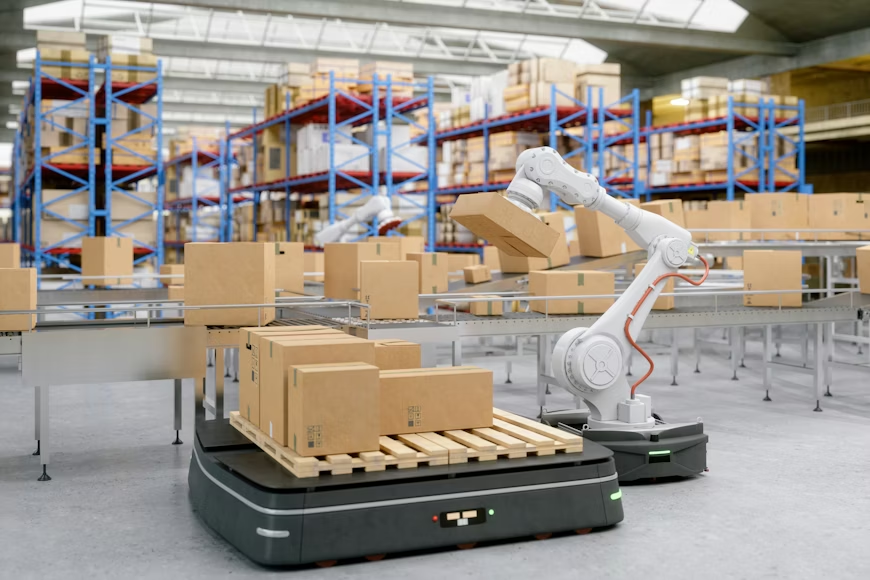






Warehouse operations are increasingly embracing intelligent automation and advanced data capabilities to cope with tightening labour markets, rising fulfilment expectations and the demand for flexible, high‑throughput fulfilment systems. The latest industry developments show how automation is now designed not just to replace labour, but to augment human productivity and drive smarter operations at every level.
According to logistics sector insights, shrinking labour pools and rising wages have shifted how companies evaluate automation investments. Rather than viewing automation solely as a cost‑cutting tool, many operators are implementing systems that work alongside staff, empowering workers to be more productive while handling repetitive tasks and complex workflows more efficiently.
Flexible automation systems — from autonomous mobile robots (AMRs) to scalable fulfilment platforms — are being built around a common software layer that supports growth from small deployments to fully automated facilities. This modular approach gives operators the ability to customise their systems according to seasonal demand and long‑term strategy rather than as one‑off upgrades. AMRs can also incorporate performance tracking and gamification elements to engage workers and improve output without compromising job roles.
The role of data and simulation tools has also expanded. Warehouse intelligence now often starts with analysing fulfilment patterns and order history — feeding into AI‑driven design tools and digital twin environments that model and optimise operations before physical deployment. This data‑centric approach enables organisations to test and refine automation strategies virtually, ensuring real‑world benefits and adaptability to changing demand.
Another emerging trend is the integration of automation with evolving fulfilment models such as micro‑fulfilment centres and locker‑based delivery networks, which help meet growing consumer expectations for fast delivery. Combining local fulfilment density with predictive data also allows businesses to optimise route planning and inventory placement for greater responsiveness.
Overall, the shift toward warehouse intelligence reflects a broader industry emphasis on technology that enhances human labour, leverages real‑time data, and supports scalable, resilient operations in the face of ongoing supply chain complexity.
#BreakingNews #SupplyChainNews #WarehouseTech #LogisticsUpdate #AutomationInsights