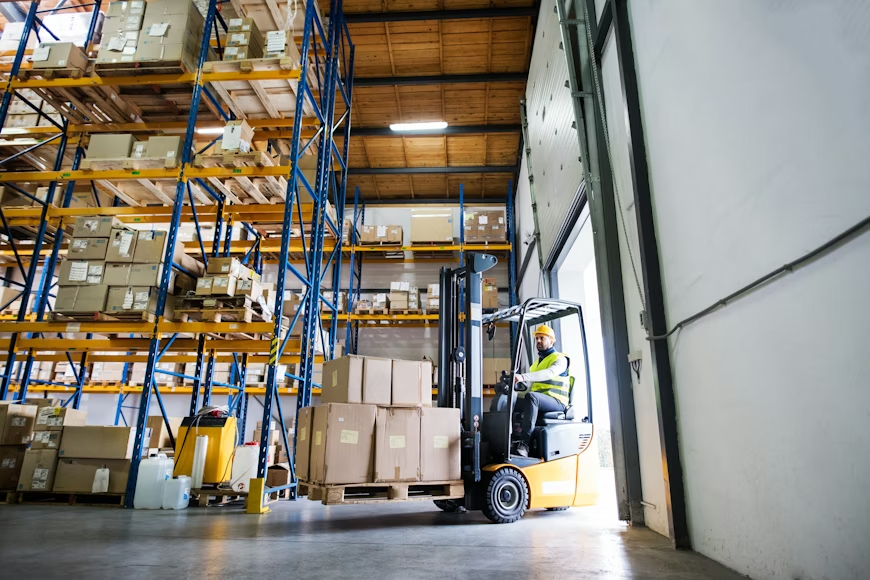






A major logistics upgrade at a São Paulo distribution campus has significantly reduced truck loading times and carbon emissions by deploying automated loading systems that streamline trailer turnaround and cut reliance on heavy machinery.
At the new facility, a Slipchain Automated Trailer Loading System was installed across multiple docks to automate cargo movement between production and warehouse buildings, eliminating manual handling and reducing the risk of worker injuries in high-traffic loading zones. The system integrates with inventory management to sequence pallet loading efficiently, optimising space and trailer fill rates.
Since the automation rollout, loading time for a trailer has dropped to about two minutes — approximately 28 minutes faster than traditional processes — improving vehicle turnaround and reducing idle time for drivers on site.
From a sustainability perspective, the shift has helped the company decrease its use of forklifts and heavy mechanical handling, which in turn lowers CO₂ emissions in line with broader environmental targets. By reducing machine operations and improving load efficiency, the logistics upgrade supports commitments to emit fewer greenhouse gases while handling high volume operations.
Safety enhancements — such as dock sensors and physical barriers — further protect workers and help avoid product damage during handling. The scalable nature of the automation also prepares the site for future expansion and increased throughput without proportional increases in labour or energy use.
#BreakingNews #SupplyChainNews #LogisticsUpdate #AutomationInnovation #SustainableFreight


