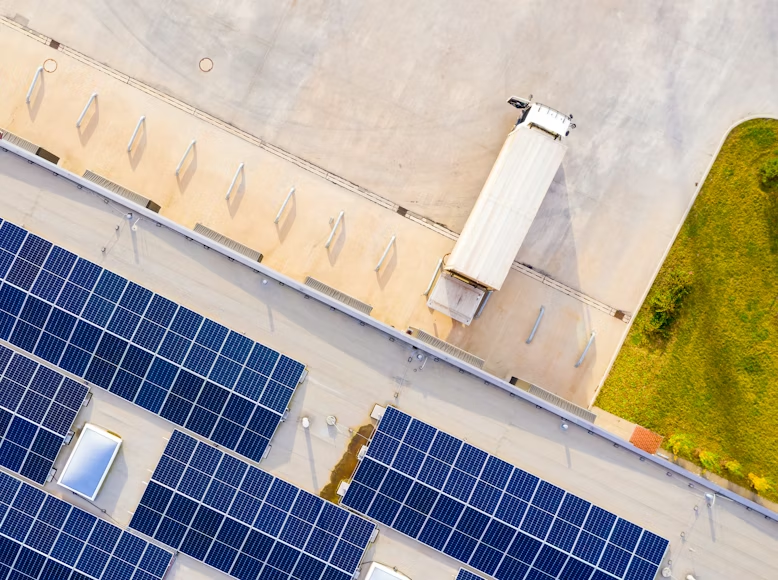







As the pressure to decarbonise warehousing operations grows among logistics and supply chain leaders, the industry is beginning to look past solar panels as a simple add‑on and toward holistic energy strategies that maximise resilience, cost control and sustainability. A recent sector analysis highlights how energy realities in warehousing are shifting as 2026 approaches.
Solar energy has long been viewed as the first step toward lower emissions for logistics facilities, particularly given the vast roof space available on distribution centres that can accommodate large photovoltaic (PV) installations and battery systems. On‑site solar — especially when paired with energy storage — has been shown to significantly cut electricity costs, improve self‑sufficiency and support electrified operations such as automated equipment and EV charging infrastructure.
However, the conversation now is evolving beyond just putting panels on roofs. Warehouse operators are increasingly focused on data‑driven energy planning and integrated systems that combine solar generation with battery storage, smart management and on‑site generation to buffer against grid instability and rising electricity prices. Warehouses are literally becoming energy hubs or mini‑power plants, capable of smoothing demand peaks, reducing reliance on volatile grid supplies, and locking in more predictable power costs over time.
This shift reflects broader realities. Rising operational costs, limited grid capacity, and surging demand from electrification — from material handling equipment to fleet charging — are forcing logistics leaders to rethink energy strategy. Rather than viewing renewables as a nice‑to‑have sustainability perk, companies are framing energy independence as a matter of resilience and competitive edge. Facilities that invest in robust on‑site generation and storage are positioned to withstand grid pressures, decarbonise operations more effectively and avoid future cost spikes as regulations tighten.
In practice, this means that smart warehousing energy plans will increasingly incorporate:
- Rooftop solar arrays paired with battery storage to capture and use renewable power even during peak demand or grid outages.
- Data‑backed feasibility studies to tailor energy investments to each site’s load profile, avoiding one‑size‑fits‑all approaches.
- Energy management tools that monitor consumption in real time, align generation with onsite use, and reduce demand charges through load shifting strategies.
As operators adopt these broader energy models, warehouses are no longer just storage and fulfilment nodes — they are strategic assets that manage both goods and energy flows to strengthen supply chain performance into 2026 and beyond.
#BreakingNews #SupplyChainNews #SustainableWarehousing #EnergyTransition #LogisticsUpdate