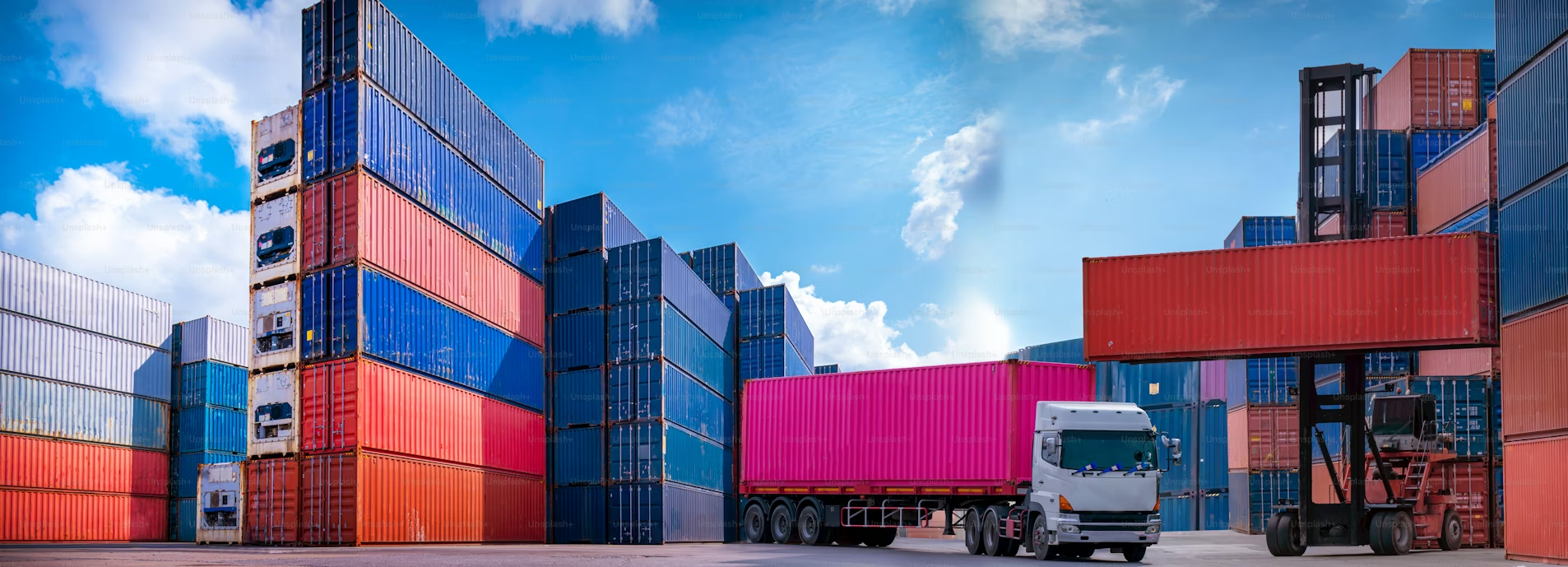







Vietnam’s government and industry leaders are pushing to turn the country’s **maritime advantages into a foundation for becoming a global logistics centre, capitalising on its extensive coastline, deep‑water ports and rapidly expanding trade flows. With more than 3,260 km of coastline and a network of deep‑water ports capable of accommodating large international vessels, Vietnam is well‑positioned geographically to serve as a key node in regional and global supply chains.
Industry analysts and government strategists point to the combination of strategic location along major sea routes, growing export volumes and expanding domestic markets as major drivers for logistics growth. Vietnam’s export turnover is on track to surpass US $900 billion in 2025, with further growth expected in the years ahead, while rising consumption supports strong cargo demand on both inbound and outbound routes.
Despite these natural strengths, stakeholders acknowledge significant challenges that must be overcome to realise a global hub status. High logistics costs — among the highest in the world — along with inadequate policy frameworks, gaps in digital and traceability systems, and a shortage of skilled logistics professionals are cited as constraints on efficient supply‑chain expansion.
To address these barriers, experts are calling for comprehensive reforms, including updating outdated commercial laws, creating dedicated legislation to support logistics development, and refining spatial planning rules to better integrate logistics centres with seaports and industrial clusters. Improved regulatory clarity and coordination between national and regional authorities are seen as critical steps toward unlocking the full potential of Vietnam’s logistics sector.
Efforts are already underway to modernise infrastructure and enhance connectivity. Deep‑water ports such as Cai Mep–Thi Vai and Lach Huyen are expanding capacity and attracting global shipping lines, while logistics strategies approved by the government aim to improve digital adoption and lower costs across transport, warehousing and distribution networks.
With sustained policy improvements, infrastructure investment and workforce development, Vietnam aims to transition from a regionally important maritime economy into a globally recognised logistics hub over the next decade — supporting trade diversification and deeper integration into global supply chains.
#BreakingNews #SupplyChainNews #GlobalLogistics #MaritimeTrade #VietnamEconomy


