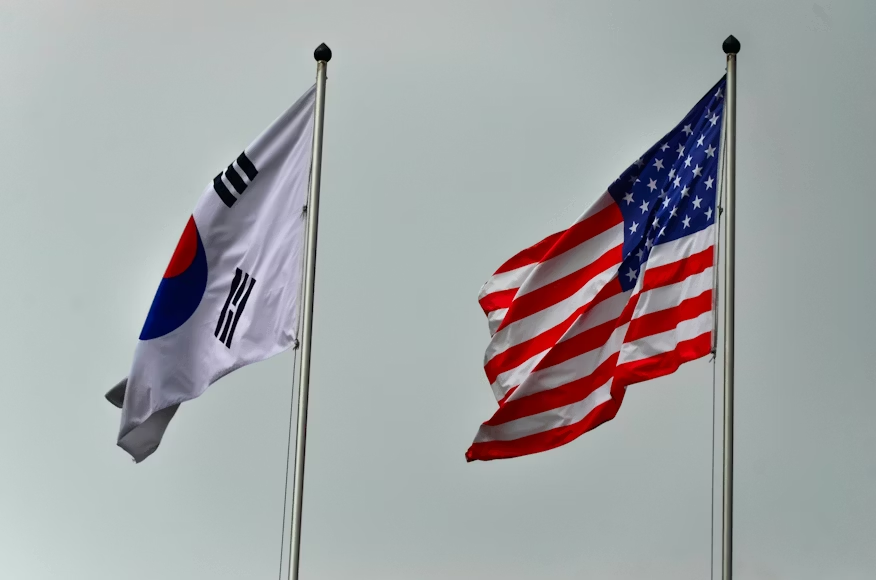







The United Kingdom and the Republic of Korea have finalised a comprehensive free trade agreement (FTA) that secures tariff-free access for the majority of goods and embeds modernised provisions aimed at strengthening supply-chain links, digital trade and services cooperation. The deal was announced in London in mid-December following negotiations that updated existing post-Brexit arrangements and extended preferential terms deep into the next decade.
Under the new agreement, permanent tariff-free access is preserved for approximately 98 % of tariff lines traded between the two economies — covering a broad range of manufactured goods and industrial inputs. This provision protects existing trade flows that were at risk of tariff escalation as previous arrangements prepared to expire, and supports sectors such as automotive, pharmaceuticals, food & beverage and advanced manufacturing.
A key feature of the upgraded FTA is the inclusion of a dedicated Supply Chains Cooperation chapter, designed to help businesses identify new industry partners, diversify sources of raw materials and deepen linkages between UK and Korean producers. More flexible rules of origin are expected to make it easier for manufacturers to structure production and sourcing across borders while still qualifying for tariff-free treatment, offering broader scope for integrated logistics networks.
The deal also embraces digital trade and modern customs facilitation, enabling electronic contracts and streamlined procedures that should reduce administrative costs and accelerate cross-border freight flows. Enhanced transparency and digital provisions are intended to support sectors where services and data flows underpin economic activity, such as financial services and tech exports.
Government and industry leaders say the agreement will boost economic ties and support export growth, with UK modelling projecting up to £400 million in additional services exports annually over the long term. Strengthened access to the rapidly expanding South Korean market — which is forecast to grow significantly by 2035 — is expected to benefit both established exporters and emerging firms seeking resilient supply-chain partnerships across Asia and Europe.
#BreakingNews #SupplyChainNews #GlobalTrade #FTANews #LogisticsUpdate