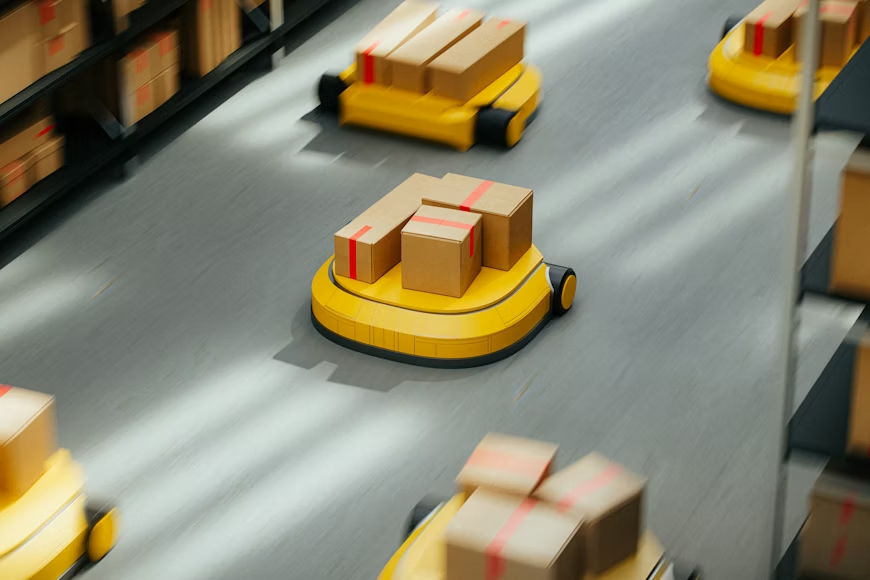






As more warehouses explore artificial intelligence (AI) to improve efficiency and decision‑making, industry insiders caution that benefits come with significant risks that must be actively managed. While AI technologies can optimise inventory, automate repetitive work and enhance visibility, they also present challenges that can affect operations, data and workforce dynamics if not carefully addressed.
One of the biggest hurdles in warehouse AI adoption is system integration and data quality. AI solutions typically require large volumes of structured, high‑quality data in order to make accurate predictions and recommendations. Warehouses with fragmented or siloed data sources and legacy systems may face significant delays and errors in AI performance, potentially undermining the very gains they’re trying to achieve.
Data privacy and security concerns also loom large. AI systems often need access to sensitive operational and personnel data, meaning organisations must ensure robust cybersecurity and compliance with privacy regulations. Without proper safeguards — such as encryption, access controls and secure data governance — AI deployments can inadvertently introduce vulnerabilities that cyber‑attackers may exploit.
Another risk is over‑reliance on machine decision‑making without sufficient human oversight. AI models can produce outputs that are difficult to interpret or that reflect biases embedded in their training data, potentially leading to flawed operational decisions if humans blindly trust automated recommendations. Maintaining a balance between AI insights and human evaluation is essential to prevent costly mistakes.
Workforce challenges also arise, as employees may resist AI tools due to fear of job displacement or lack of skills to work alongside new systems. Effective change management, reskilling programmes and clear communication about how AI complements — rather than replaces — human roles can help ease transitions and preserve morale.
Finally, regulatory ambiguity and ethical considerations around AI use in industrial settings can expose companies to compliance risks. The tech’s rapid evolution has outpaced legal frameworks in many regions, meaning warehouses must often navigate unclear standards while implementing AI responsibly.
Taken together, these risks illustrate that implementing warehouse AI isn’t merely a technology upgrade — it’s an organisational change that requires strategic planning, robust data practices and ongoing risk governance to ensure success and protect operational integrity.
#Breakingnews #SupplyChainNews #AIrisks #WarehouseTech #LogisticsUpdate