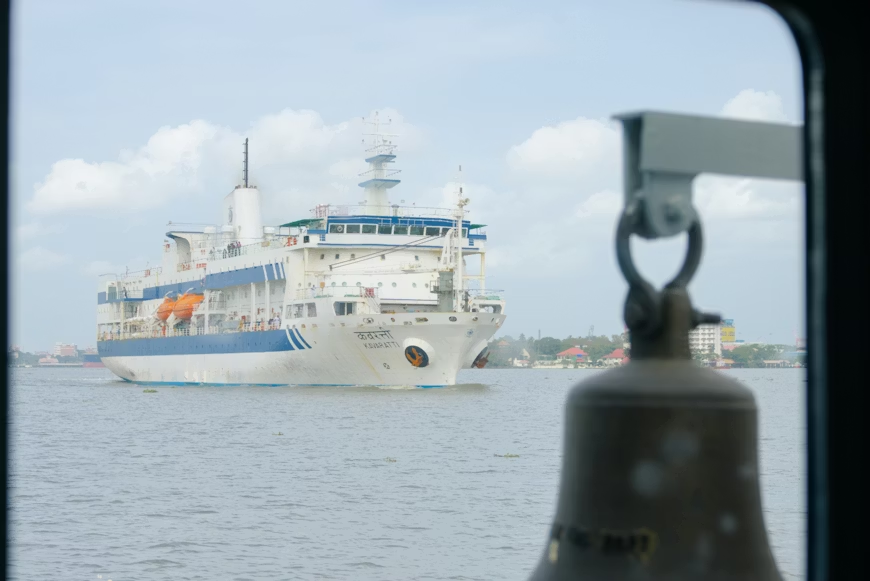






A significant shift in maritime supply chains is underway as a major global carrier has structurally returned one of its key services to the trans-Suez route, reconnecting the Middle East–India–U.S. East Coast (MECL) service to the faster Suez Canal corridor after more than two years of detours around Africa.
The decision follows successful test transits through the Suez Canal by two vessels, which demonstrated that improved regional conditions allow safer navigation compared with the extended detours via the Cape of Good Hope used during heightened Red Sea security threats. Under the revised routing, both eastbound and westbound sailings on the MECL service are now scheduled through the Suez, aiming to restore the service to its original design and more efficient transit times.
Operational planners say the return to trans-Suez routing could significantly shorten voyage times and reduce fuel consumption, as the Suez Canal remains one of the world’s most critical trade arteries for Asia–Europe and Asia–U.S. East Coast cargo movements. Vessels departing from the Middle East and Indian subcontinent now sail a more direct course, cutting days off journey times compared with the longer southern Africa route.
Despite this adjustment, carriers emphasise that the restart of trans-Suez operations remains contingent on continued regional stability. Companies will continue to monitor conditions closely and retain contingency plans that could reinstate diversions if security threats re-emerge in the Red Sea or adjacent waters.
Supply chain stakeholders say the move is a key signal to global logistics networks that one of the major chokepoints for ocean freight is reopening for mainstream traffic, with potential effects on freight costs, transit reliability and vessel deployment across Atlantic and Indo-Pacific trade lanes.
#Breakingnews #SupplyChainNews #MaritimeUpdate #SuezCanal #GlobalShippingNews